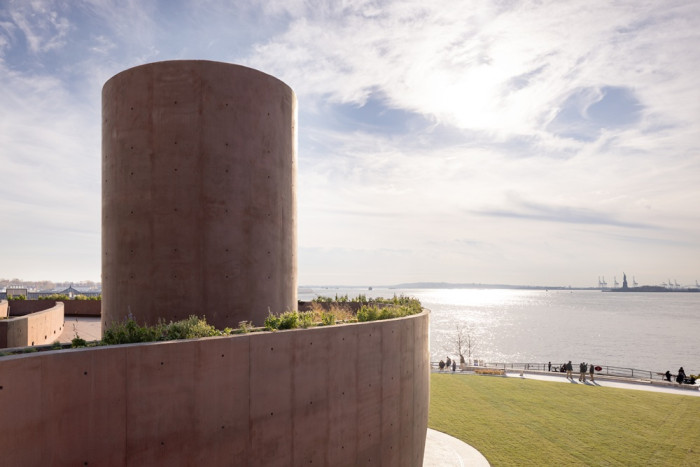
THOMAS PHIFER AND AECOM, ROBERT F. WAGNER JR. PARK
AND PAVILION
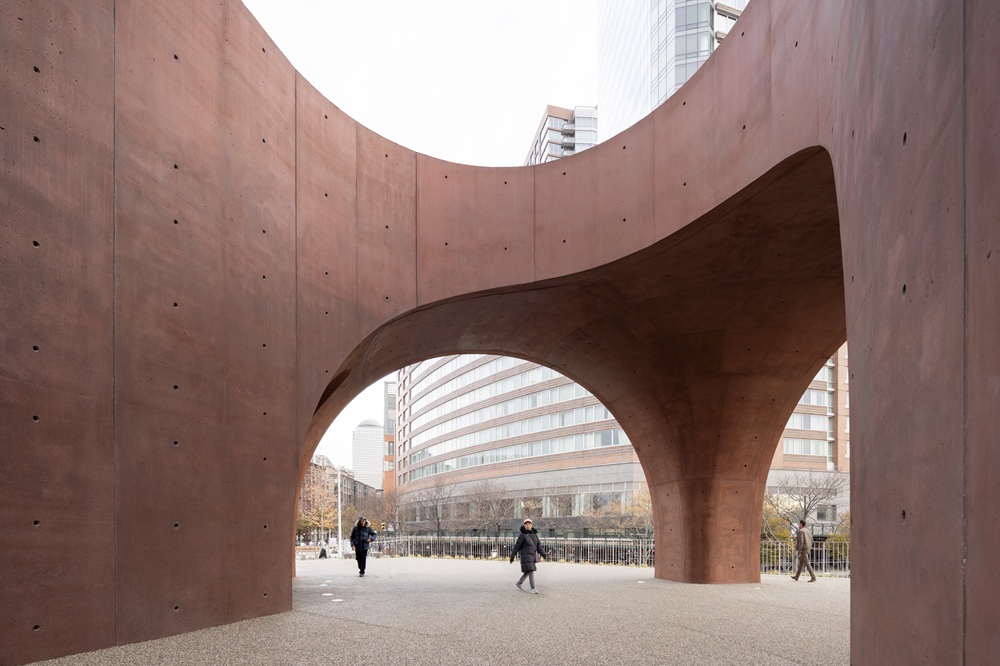
The New York firm Thomas Phifer and Partners, in partnership with AECOM – a multidisciplinary engineering company specialising in environmental technologies – has designed the Robert F. Wagner Jr. Park and Pavilion, a new public green space and civic infrastructure on the Battery Park City waterfront in New York. It is designed along environmental-friendly lines for one of the most densely built settings in New York City, especially as regards the risks associated with storms and a rise in the sea level.
The design and planning of Wagner Park reflect a cooperative, interdisciplinary approach that combines flood hazard reduction, landscape design and architecture focused on waterfront views, better pedestrian connectivity and easy access to the surrounding fabric of Lower Manhattan. The future park will be elevated approximately 3 meters above the level of the old park to address flood risks, while keeping views of the harbour and access to the Museum of Jewish Heritage to the north, Battery Place to the east, and Pier A Plaza to the south.
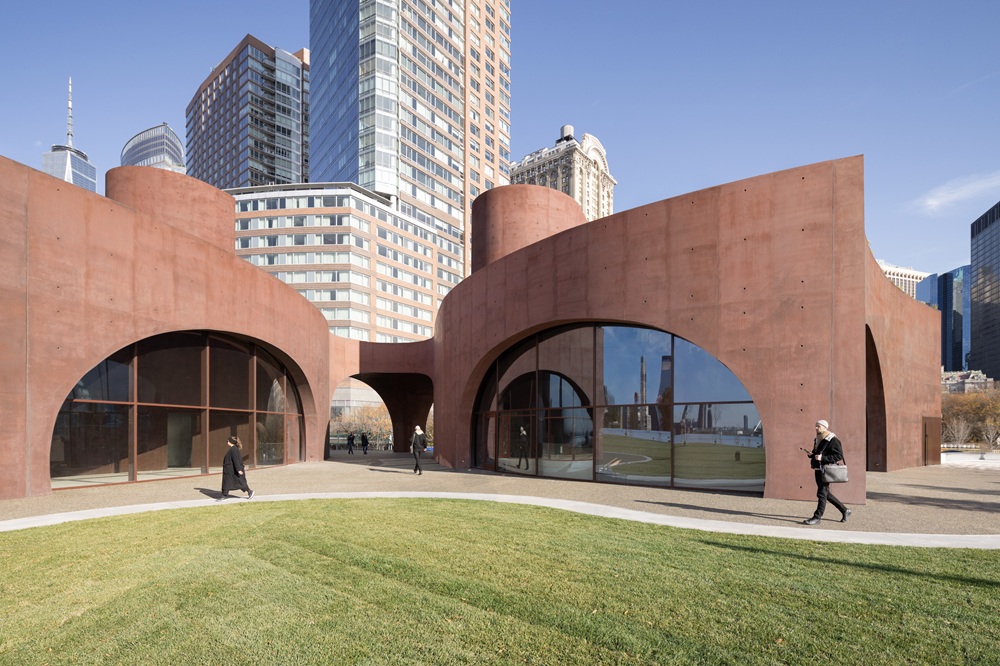
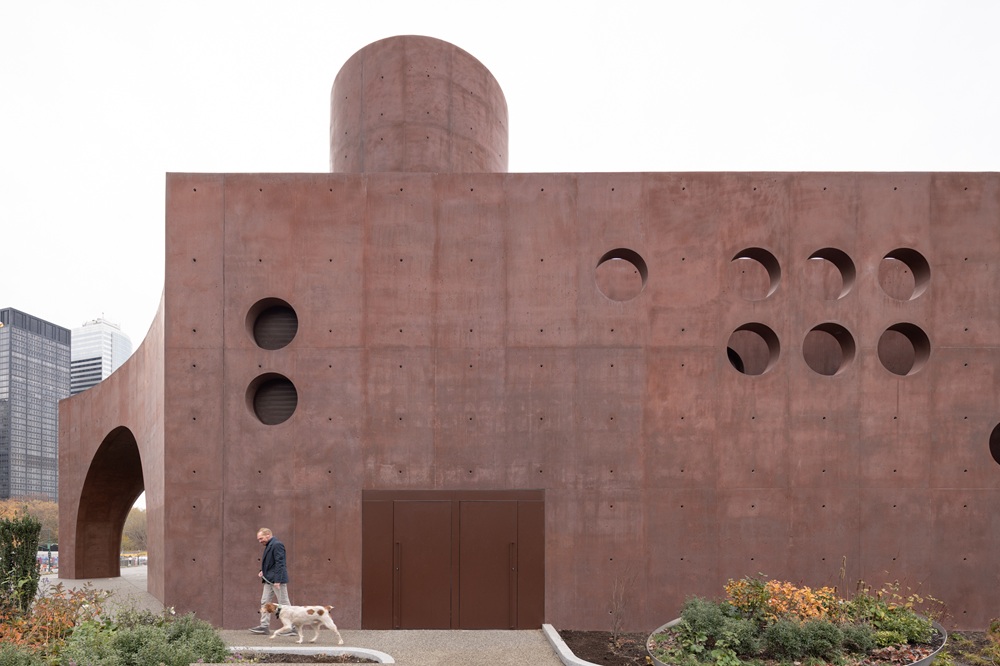
Featuring a structural design based around soft forms in harmony with the surrounding park, the Wagner Pavilion houses a restaurant and a meeting room affording perfectly framed views of the Statue of Liberty and Ellis Island. Visitors to Robert F. Wagner Jr. Park enter the Pavilion from Battery Place by walking across two sloping gardens, each with its own tree-lined avenue.
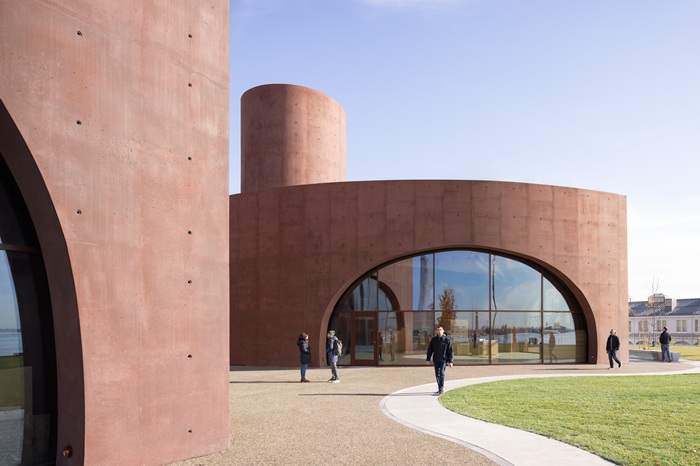
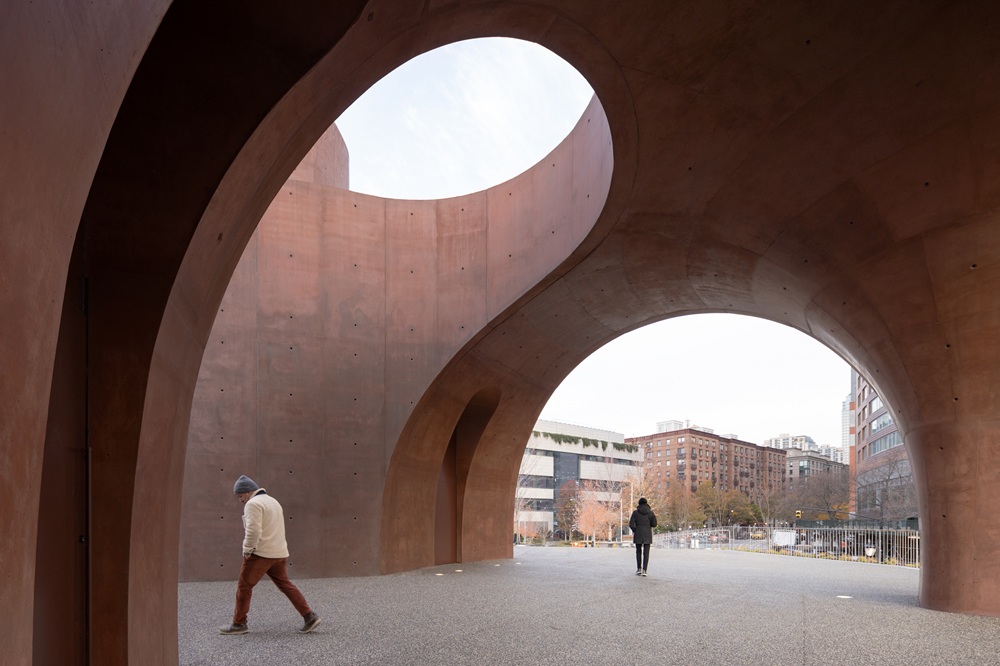
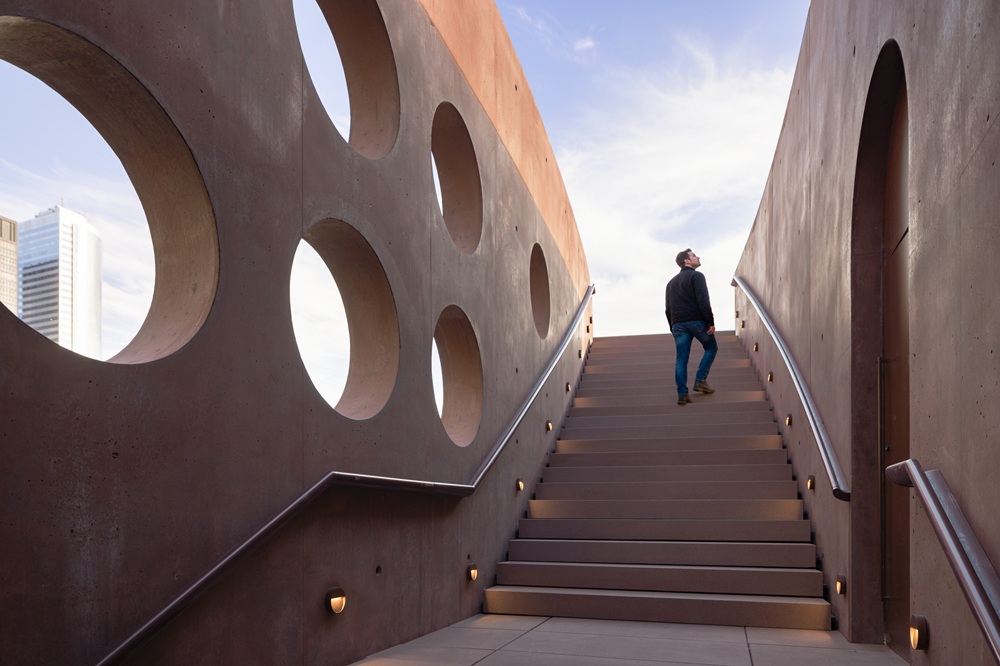
The intense, warm red of the Pavilion's concrete harmonises with the brick architecture of the buildings in Battery Park City. The arched vaults welcome the public into an entrance square serving as a gateway to the park. The spacious green park and harbour come into view as you pass beneath the imposing vault. Two grand staircases and an accessible elevator lead visitors to the panoramic terrace, which offers a 360-degree view of New York Harbor and Battery Park over towards Staten Island and New Jersey, as well as views of Battery Park City and downtown Manhattan.
The new Pavilion is designed to minimize environmental impact through measures such as the recycling of building waste and the reduction of carbon emissions. The project aligns with the long-term sustainability goals of Battery Park City.
Client: Battery Park City Authority, BPCA; Prime Consultant: AECOM; Landscape Architecture and Urban Design Team: AECOM LAUD - Landscape Architecture and Urban Design Studio (Gonzalo Cruz, Tristan Porto, Yanni Ma, Garret Avery, Katie Barsanti, Hogan Edelberg) ; Architectural Design Team: Thomas Phifer and Partners (Thomas Phifer, Ryan Connolly, Jean Phifer, Sharmin Bhagwagar, Andrew Mazor, Gabriel Smith, Robert Chan, Naomi Ng, Jessica Luscher ; Landscape Architect of Record: SiteWorks (Andrew Lavallee, Ruth Nervig, Roberto Palomeque). Photos by Scott Frances