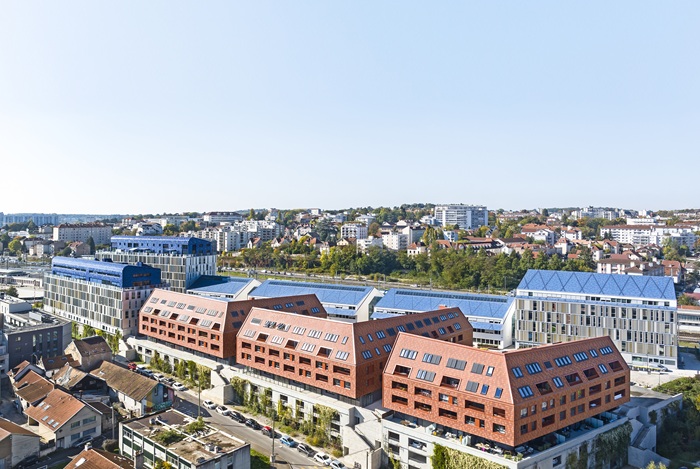
SILVIO D’ASCIA, RÉSIDENCE GÉNIUS, BESANÇON, FRANCE
After
the acclaimed expansion project for the Fondation Maeght in Saint-Paul de
Vence, Silvio d’Ascia has left his hallmark on another interesting and
successful project in Besançon: the Génius residential complex. Two settings,
entirely different building types and programs unified by the same underlying methodology
and design vision based on a careful analysis and understanding of the location,
working from the “genius loci” itself, to develop an architectural design that
enhances the landscape without imposing itself, preferring instead to draw on carefully
calibrated stylistic-structural features in harmony with the existing setting.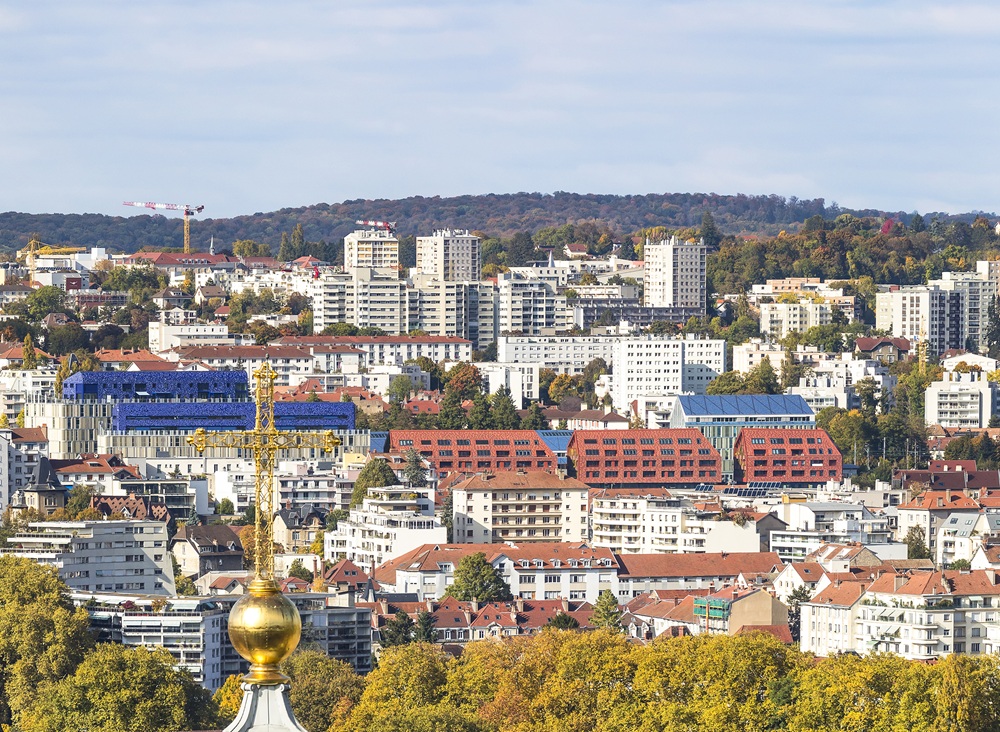
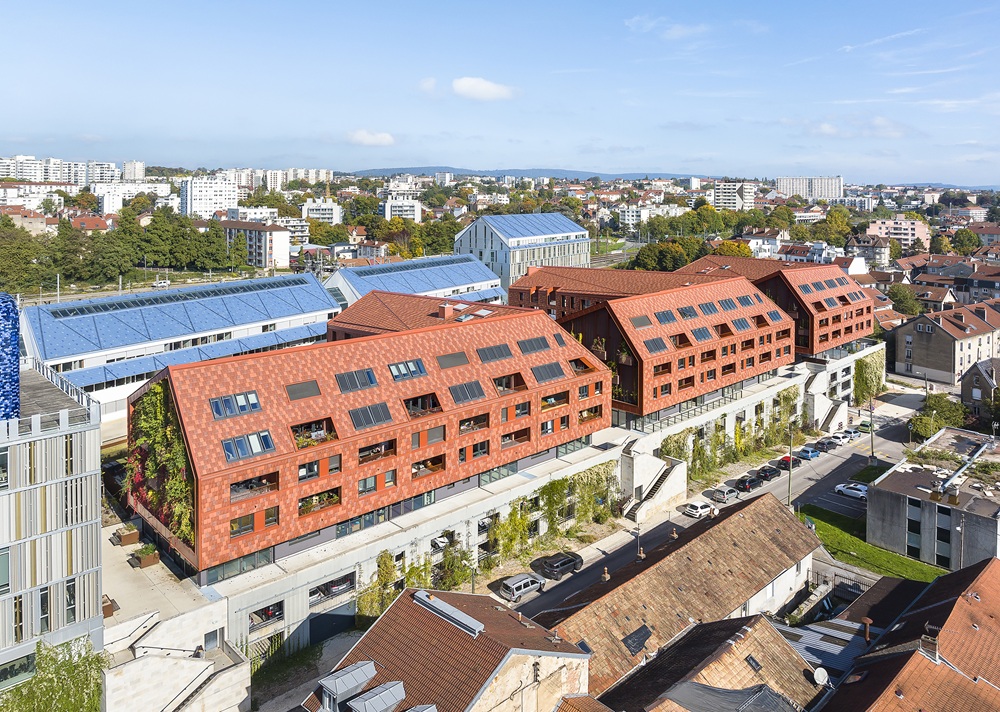
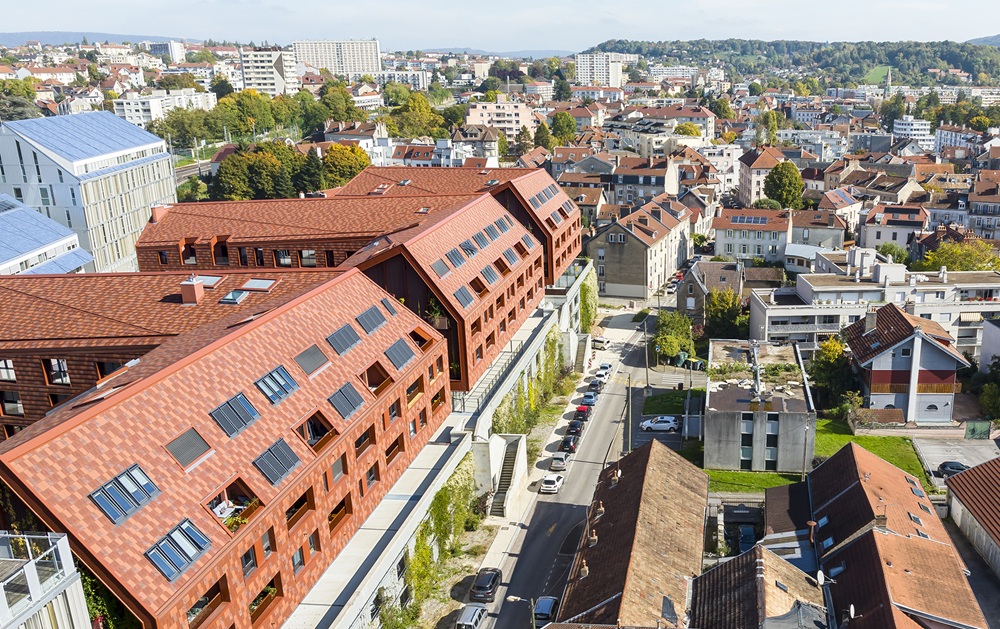
An urban redevelopment project for a disused railway area lies at the heart of the Viottes eco-district, a residential complex consisting of three easily identifiable buildings opening onto garden courtyards surrounded by a mix of 129 housing units, tertiary activities, sports facilities, services and commercial spaces.
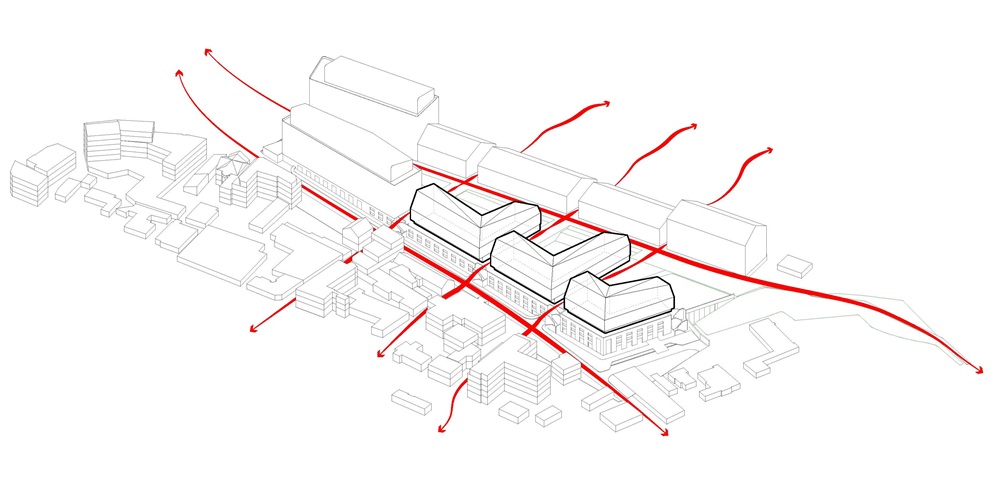 Aligned
along the pedestrian axis accommodating the new station district, the
monolithic structures are defined by the material properties of the terracotta
facades, which interact with the blue of the roofs of the Metra & Associés
Regional Administration Centre.
Aligned
along the pedestrian axis accommodating the new station district, the
monolithic structures are defined by the material properties of the terracotta
facades, which interact with the blue of the roofs of the Metra & Associés
Regional Administration Centre.
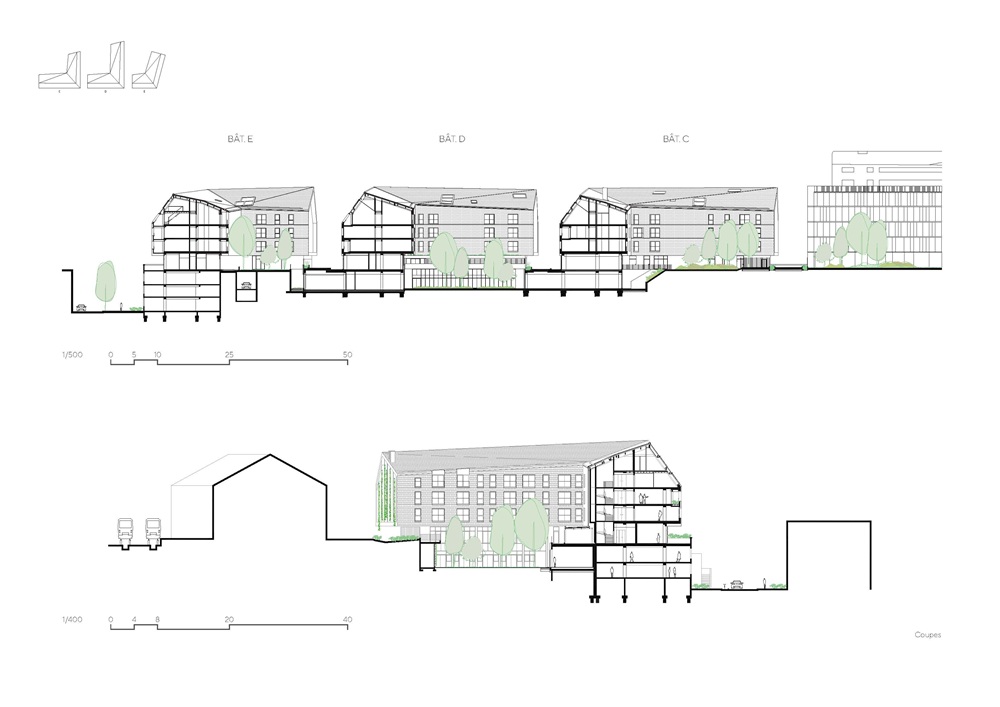
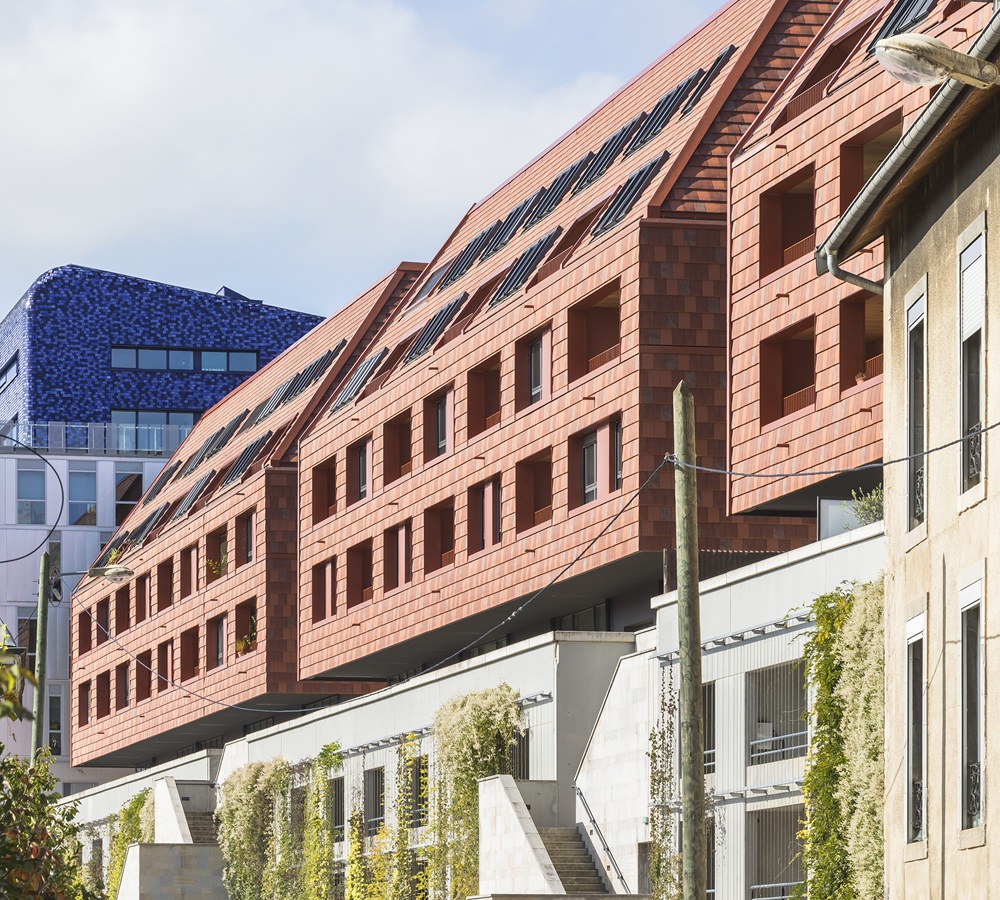
The choice of terracotta reinterprets the city’s historical identity along contemporary lines; the pitched roofs blend in with the vertical facades thanks to the interplay of apartment loggias that inject rhythm into the structures, creating an architectural ensemble that resonates with the urban setting. Used in a seamless, uniform manner, from the roofs to the facades, terracotta is treated like a protective skin, highlighted by a random composition of three colours (55% dark, 30% red, 15% Burgundy sandstone), evoking the shades of traditional roofs.
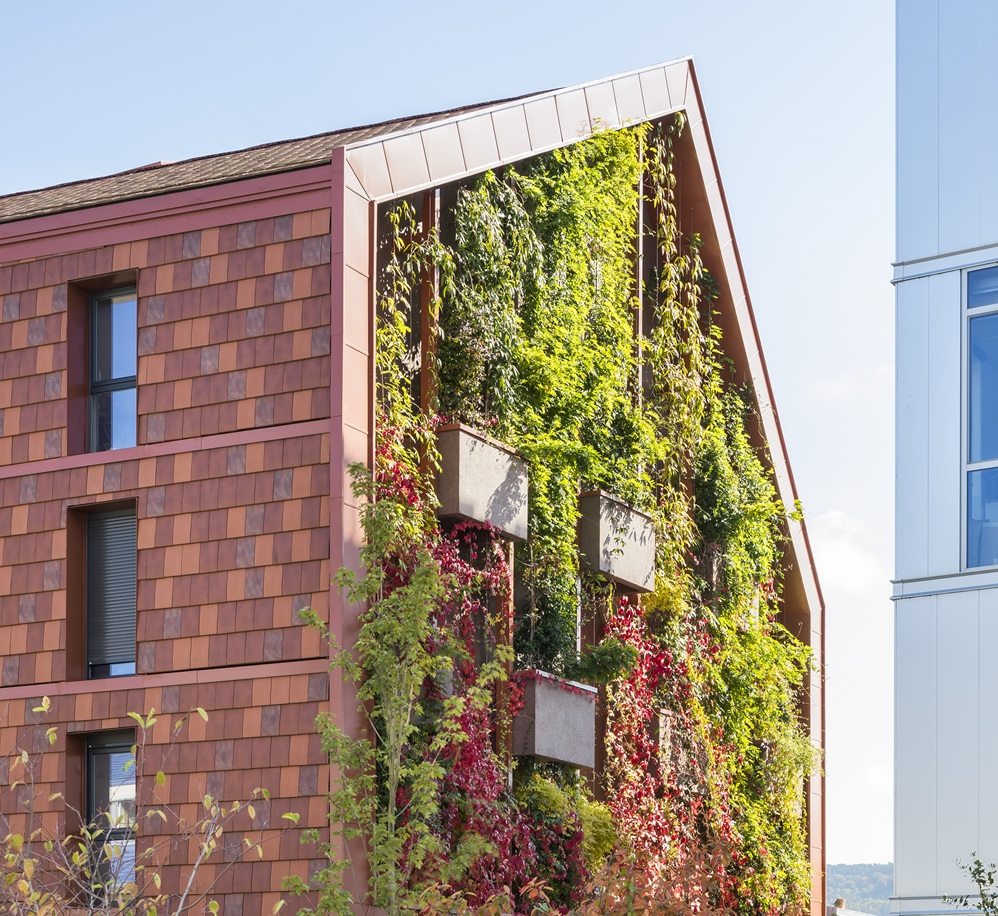
The
vegetation-style building facades act as authentic environmental devices.
Thanks to a system of vertical metal elements that support the various plant
containers, a vegetative layer is created that regulates the temperature of the
facades and protects against summer overheating.
The
building's energy performance is based on a bioclimatic approach that combines
compact structures, careful positioning
and the meticulous sizing of glazed surfaces to optimise comfort in summer and
limit energy consumption in winter. Additionally, thermal performance is
enhanced through the use of biobased materials, such as wood and curly wool,
which contribute to reducing the carbon footprint and improving the
hydrothermal comfort of the apartments.
Overall,
the Génus complex is a functional and open urban ecosystem where generational
mix, uses and services are combined to instil the neighbourhood with a new form
of urbanity shaped by iconic architecture, which, at the same time, is rooted
in the historical context of Besançon.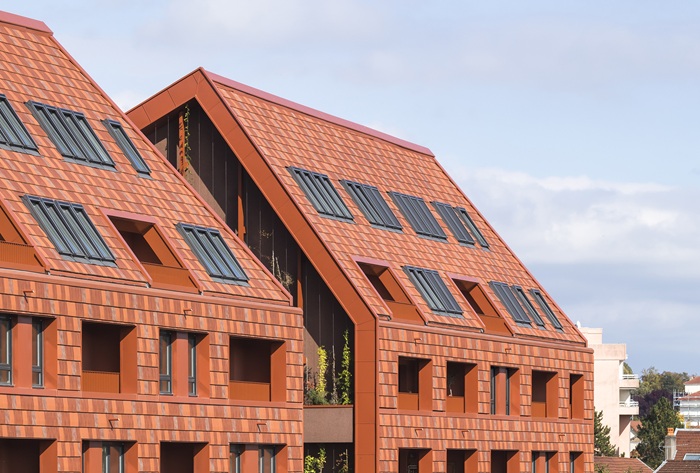
Client: SMCI
Editeur Immobilier ; Project: Silvio d’Ascia Architecture; Interior
design: ART & Associés, Laurine Darne Intérieurs; Structure:
FDI; Fluids: OSMO; VRD: Cabinet Merlin; Acoustic:
Acoustique France; Economist: ICP; Geotechnical Engineer:
B3G2 ; Moex: Cuenot Ingénierie ; Program: Mixed-use
development, 129 housing units, office space, sports facilities, services, and
shops; Floor area: 9 625 m². Photo: ©
Sergio Grazia, © Nicolas Waltefaugle