JUNYA ISHIGAMI+ASSOCIATES, ZAISHUI ART MUSEUM, RIZHAO, CHINA
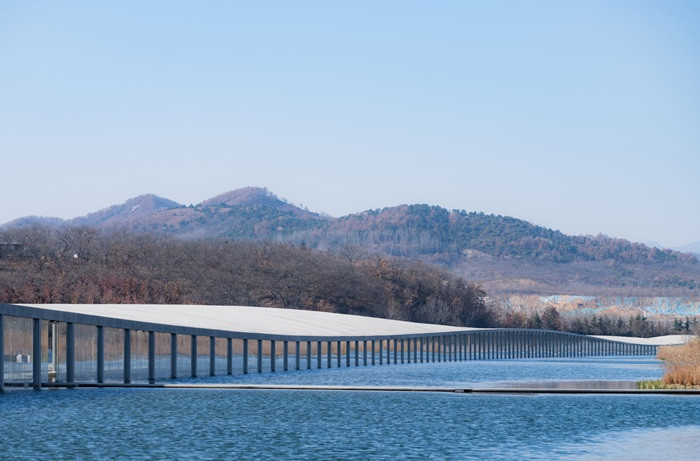
Zaishui
Art Museum, a project that combines architecture and
landscape through a particularly stylistic form of
osmosis and continuity, was designed by a leading exponent of Japanese
architecture, Junya Ishigami (1974), head of the Tokyo-based firm Junya
Ishigami+Associates.
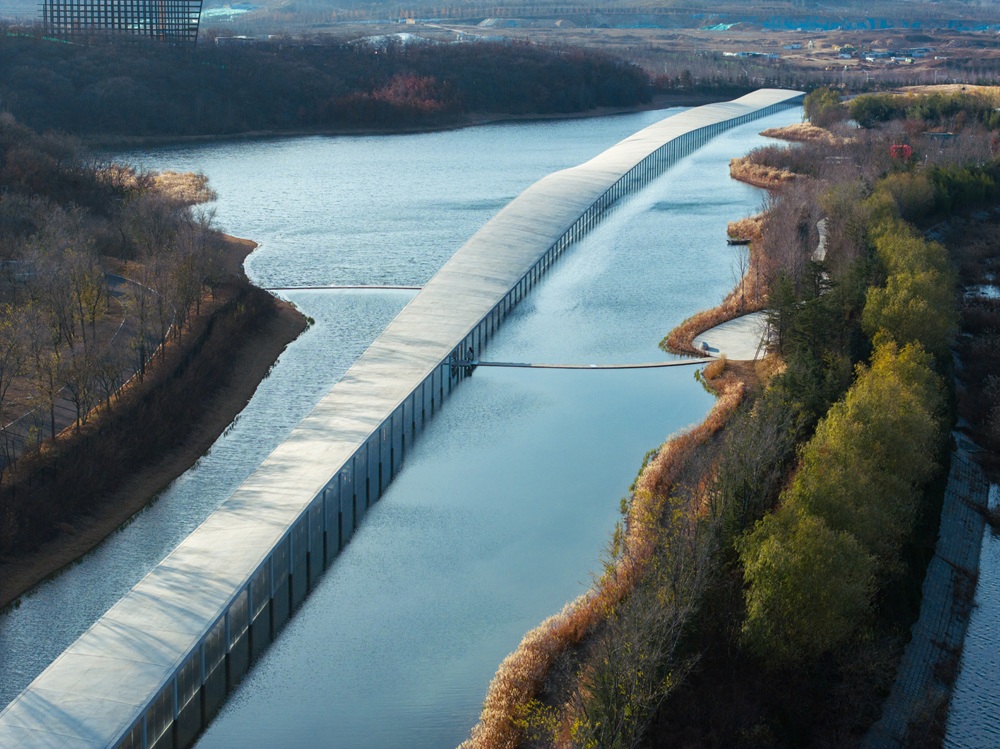
The
architect’s main concern when designing this museum, part of a more extensive
urban development project in the city of Rizhao in Shandong province, was, in
fact, to challenge the immensity and depth of Chinese landscapes through
architecture capable of integrating into “this colossal environment” on an even
standing.
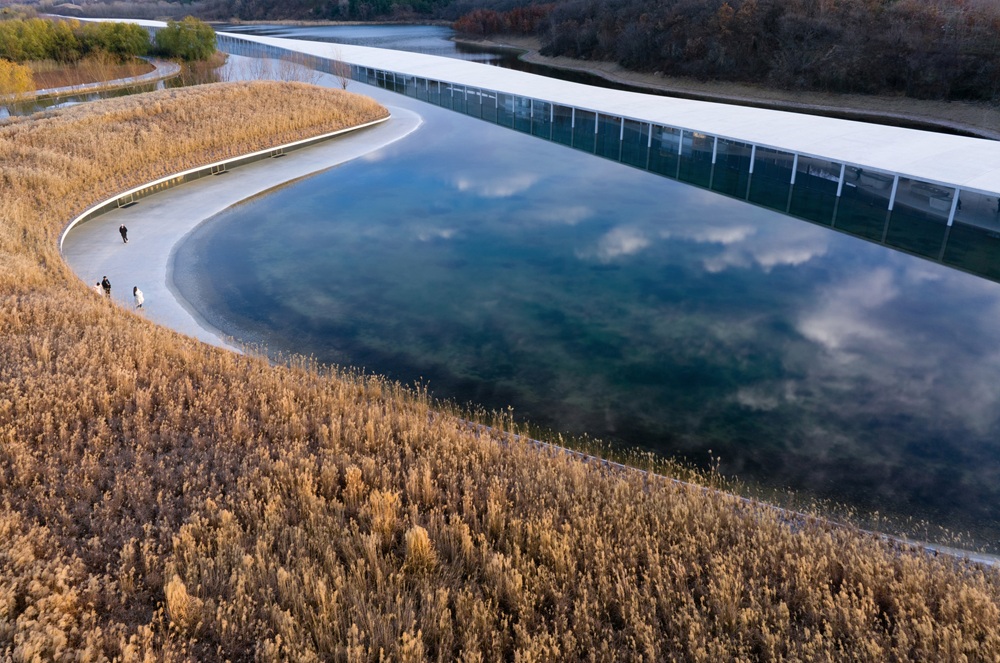
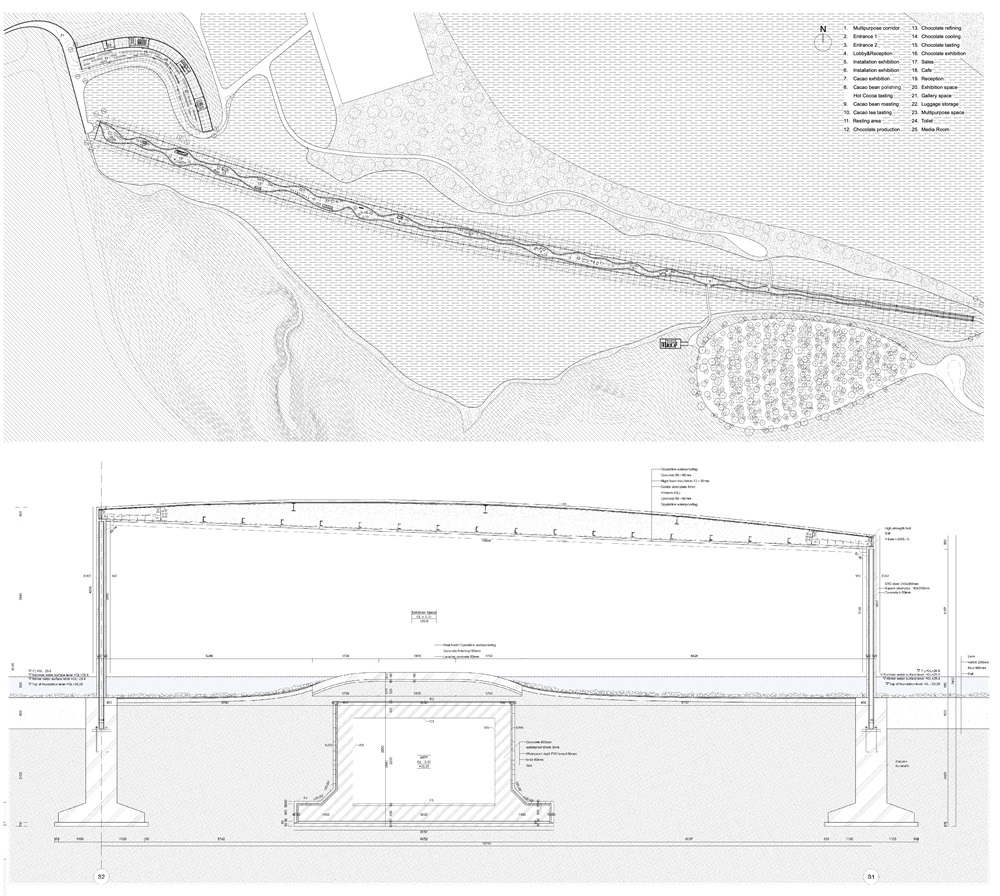
The
building, covering about 20,000 square meters, houses a chocolate museum and
other works of art, a visitors centre and a shopping mall. It is built on an
artificial lake and serves as a link to the newly developed area.
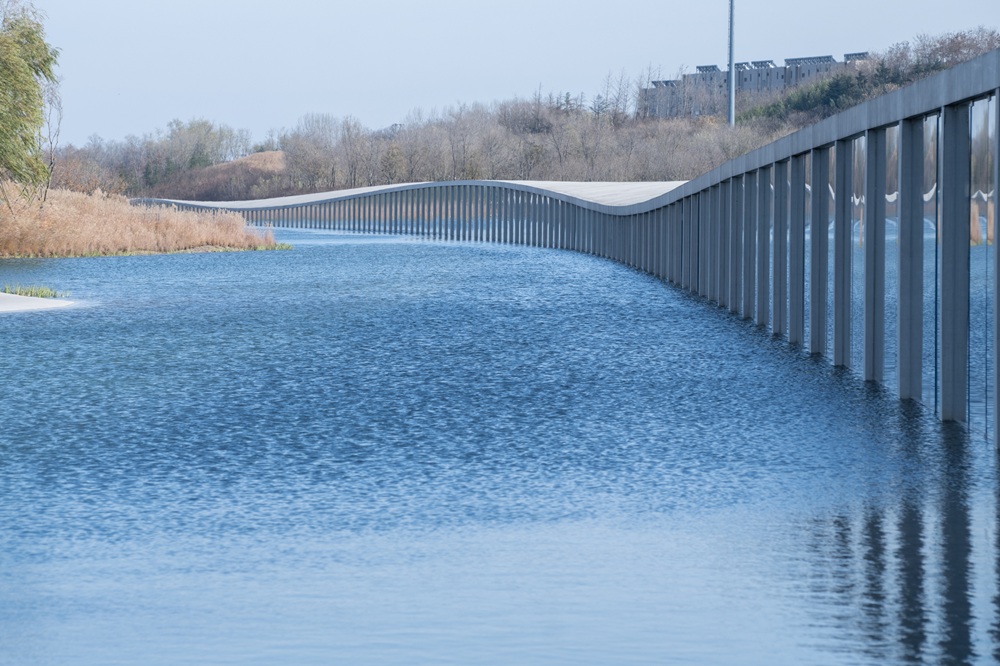
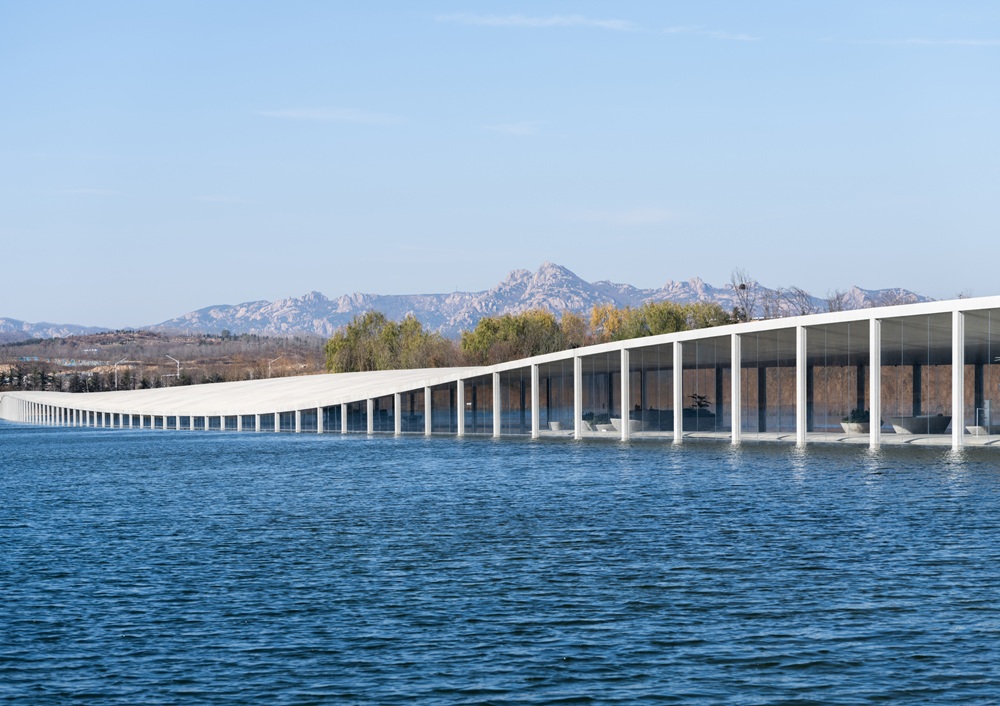
Ishigami's
architecture features a sort of long, inhabited walkway suspended above the
water that gently extends for a whole kilometre from one side of the lake to
the other. Transparency, lightness and fluidity are the guiding elements behind
the stylistic idiom of the entire design. A row of columns standing at regular
intervals emerges from the surface of the water to support the roof that
creates a wavelike movement. The columns are connected by moving glass panels
in some sections, allowing them to be opened when the weather is good and
provide greater continuity with the natural elements.
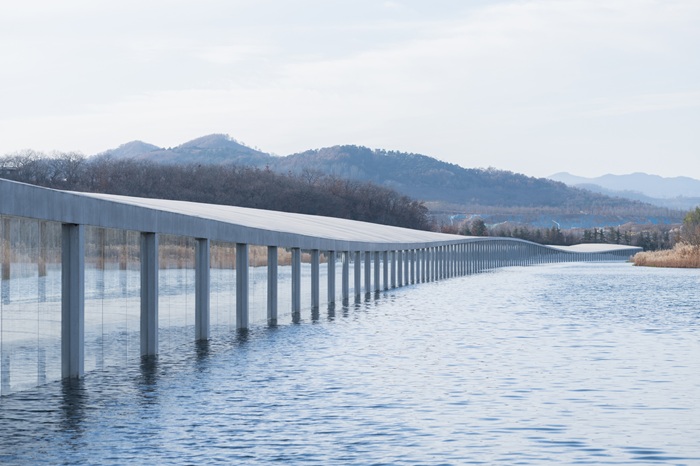
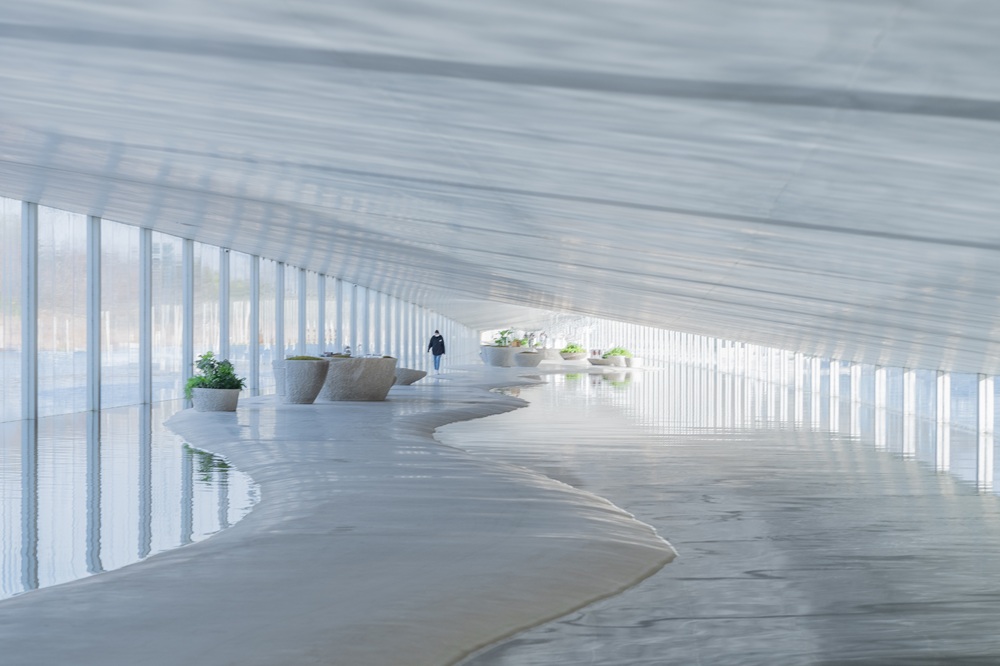
But
building's floor is where the uniqueness and real meaning of the project come
together. This surface is designed to be an authentic continuation of the lake,
“a new piece of land” that extends to create the feeling sensation of walking
on water.
The
underwater sections of the glass panels have slots that naturally channel the
lake water into the museum creating a landscape where the interior merges with
the exterior. Moving through the building, there are large floor areas designed
for hosting exhibitions, interspersed with wide surfaces of water where the
floor narrows. In winter, when the lake freezes, the liquid beneath the ice
flows inside through the slots in the glass elements, collecting there in
anticipation of spring.
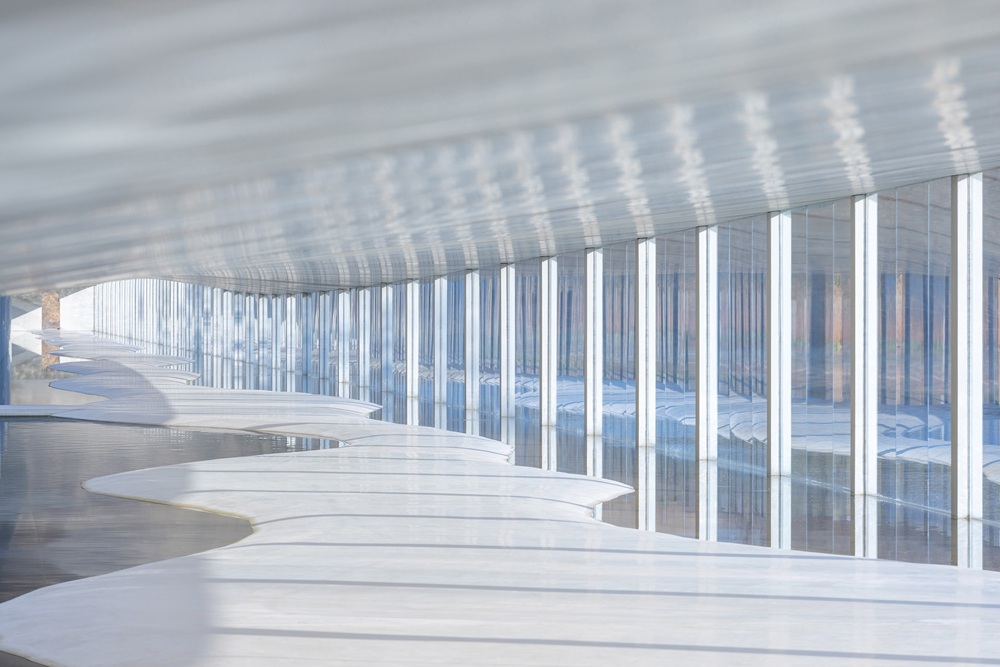
The
different ceiling heights also emphasis two of the museum’s main natural features,
light and water. Light and the landscape take centre stage where the ceiling is
higher; they are reflected in the water where it is lower and softer light
glides across the surface of the water and is reflected on the ceiling.
Client: Shandong Bailuwan; Project: Junya.ishigami+ associates; Design Lead: Junya Ishigami, Sawao Ri; Design team: Zhirui Lin, Sellua Di Ceglie, Rui Xu, Tong Zhang, Cing Lu, Yuxuan Zhou, Zhixuan Wei, Yunyi Zhang, Hanyang Zhou, Qinxuan Li, Jason Tan, Anping Song, Yichen Ji, Project team: XinY structural consultants, Xin Yuan (Structure); Xueqin Yin (Environment-friendly solution to Building services Engineering);Environment-friendly solution to Building services Engineering, Xueqin Yin (Lighting adviser); Junya.ishigami+ associates, Junya Ishigami, Sawao Ri, Rui Xu, Yuxuan Zhou, Jason Tan, Anping Song, Yichen Ji (Furniture design); Sichuan Yutong Stone(Stone material factory); Junya.ishigami+ associates, Junya Ishigami, Sawao Ri, Zhixuan Wei, Rui Xu, Cing Lu, hanyang Zhou, Qinxuan Li, Yunyi Zhang (Supervision); Beijing Yihuida Architectural Concrete Engineering (Construction). Photos:arch-exist,