A HAVEN OF MODERNITY IN AMMAN, PROJECT BY SAJA NASHASHIBI
by Mario Pisani
Arriving in Amman, you are immediately struck by the evolution of the city's skyline, an eclectic dialogue between tradition and modernity. Once a mosaic of ancient settlements, the capital now features a fabric of contemporary two-storey brick houses, impressive residential towers, and international design icons. The skyscraper designed by Sir Norman Foster looms on the horizon, while projects by Zaha Hadid, Mario Botta, and Architecture Studio are ready to redefine the city's urban identity. There is general feel of redevelopment and regeneration, as epitomised by Jordan's most important hospital, the King Hussein Cancer Center, and the headquarters of the national airline, both admirable examples of refined elegance.
Meanwhile a new generation of architects is making its mark, including Saja Nashashibi, an emerging player on the Jordanian architectural scene.Educated the University of Jordan and in Germany and having completed an internship in Italy, where he refined his skills under Paolo Portoghesi after briefly studying with the late Jafar Toukan, Nashashibi has designed a number of eye-catching works, most notably his signature project fore ‘The Grey House’.
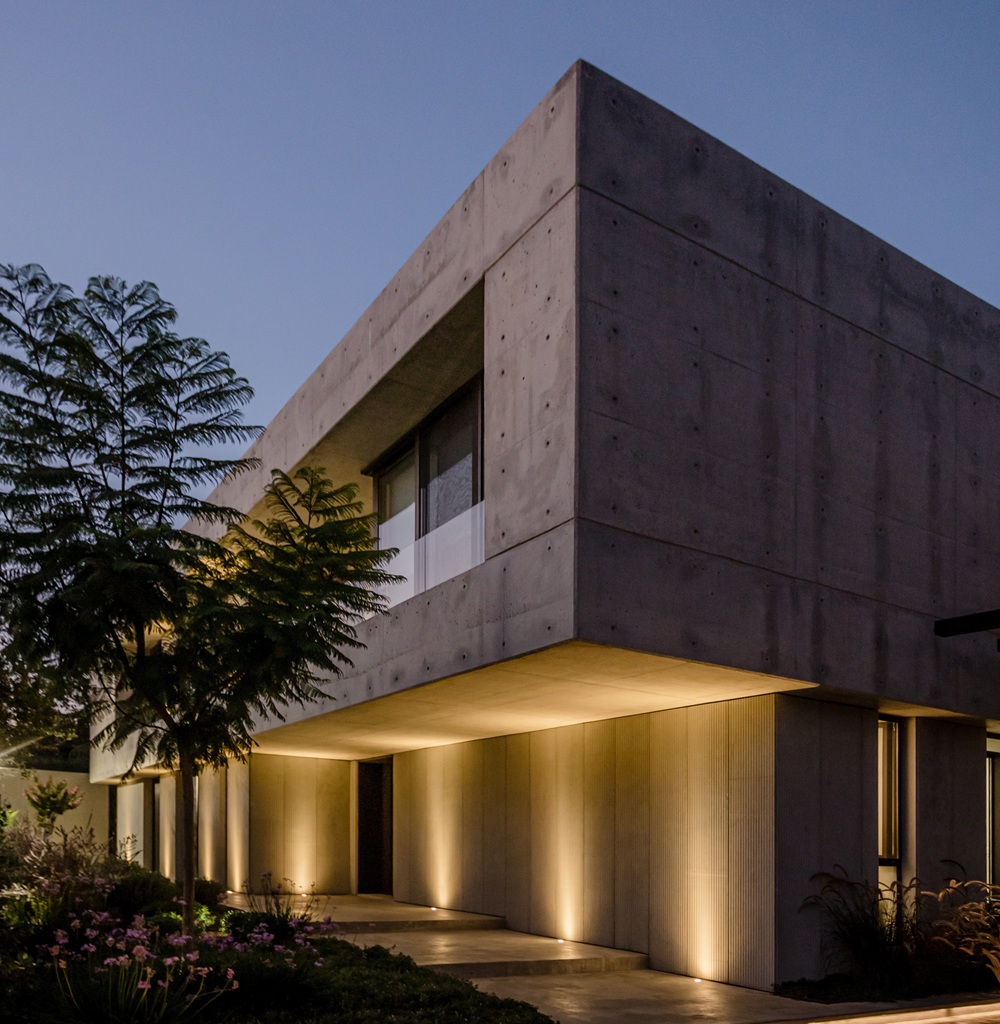
Introverted geometry in Dabouq
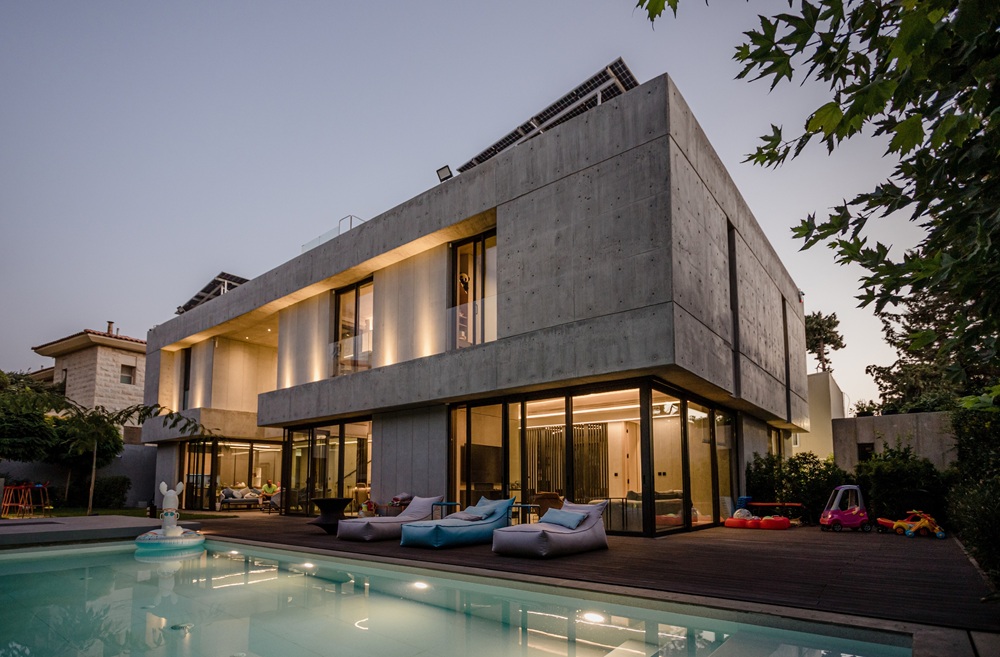
Set in the exclusive neighbourhood of Dabouq, The Grey House is a private residence covering 770 m². Located on a square plot of land and framed on all sides by neighbouring houses, it is both a discreet and assertive architectural design. Accessible via a narrow 3-meter wide road, the house embraces its own privacy, turning inwards through its bold U-shaped geometry that frames a cosy courtyard.
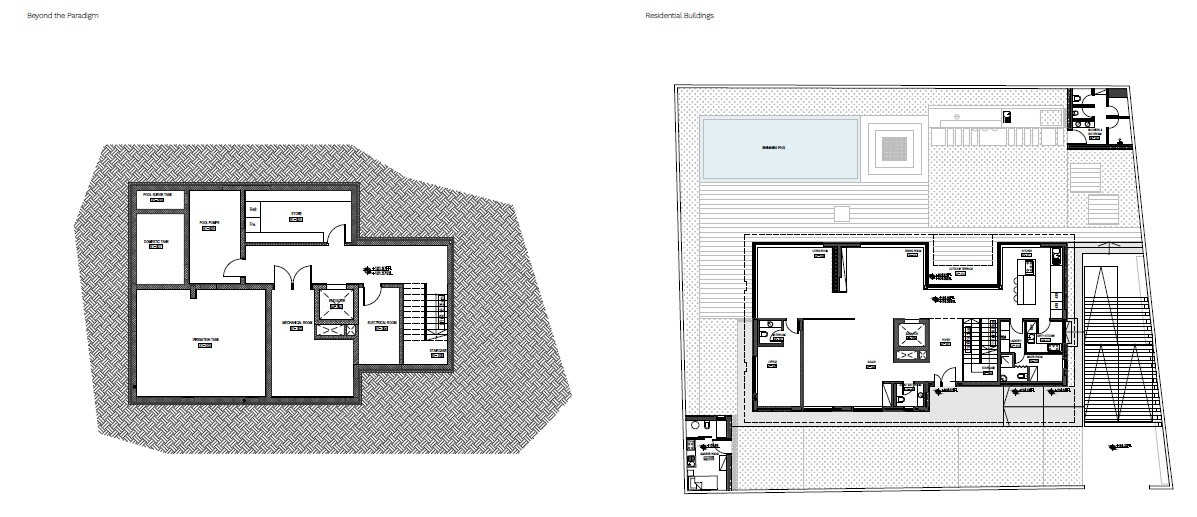
This central space extends into the
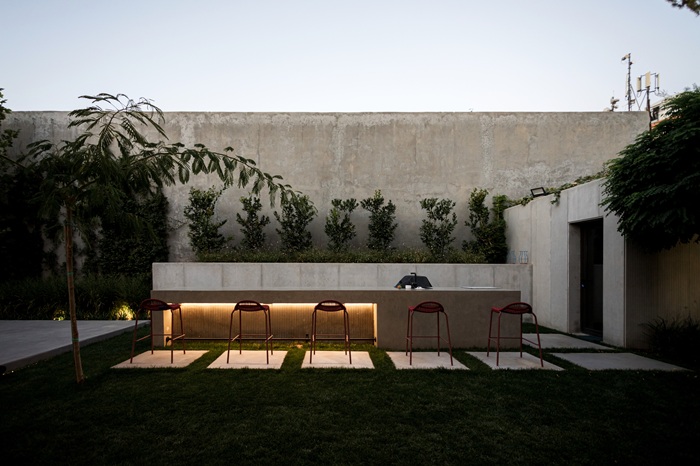
rear garden; a lush setting with its own 10-meter swimming pool, an outdoor
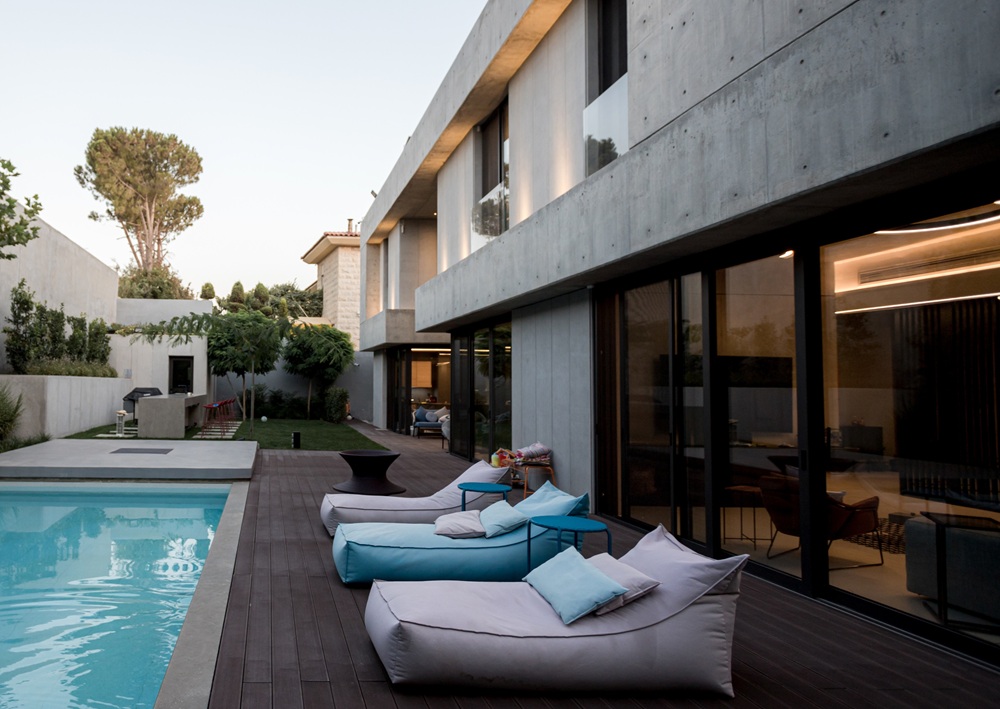
lounge, a barbecue area, and a children's play area. Floor-to-ceiling windows break
down the barrier between indoors and outdoors, creating a living environment
where light and landscape merge to blur the boundary between enclosed space and
open space.
Greyness abounds
Faithful to its name, the house is clad in a palette of exposed raw concrete and high-resolution stone textures, whose monochromatic surface is contrasted by large sliding glass panels. This contrast creates a quiet theatrical effect: the solidity of mass against the transparency of air and greenery. The architectural forms are austere, but their impeccable realism catches the eye.
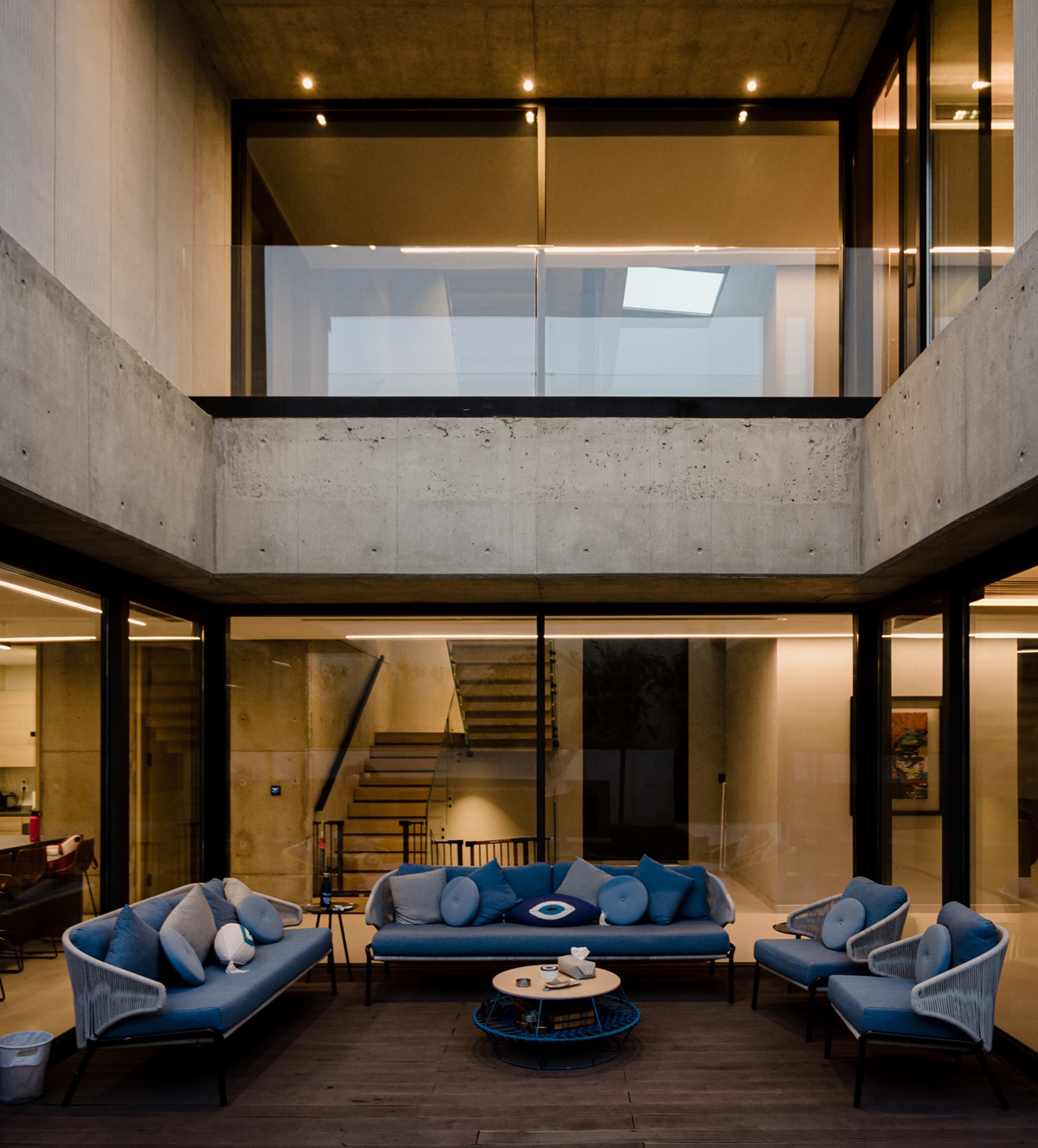
Inside, the spatial laout reflects a
delicate balance between openness and privacy. The ground floor unfolds like a
welcoming stage: an open-plan living and dining area that extends out into the
garden. On the upper floor, the private spaces are arranged around a more
intimate living room, with the bedrooms overlooking the courtyard to ensure both
seclusion and connection.
An honest and precise architectural
language
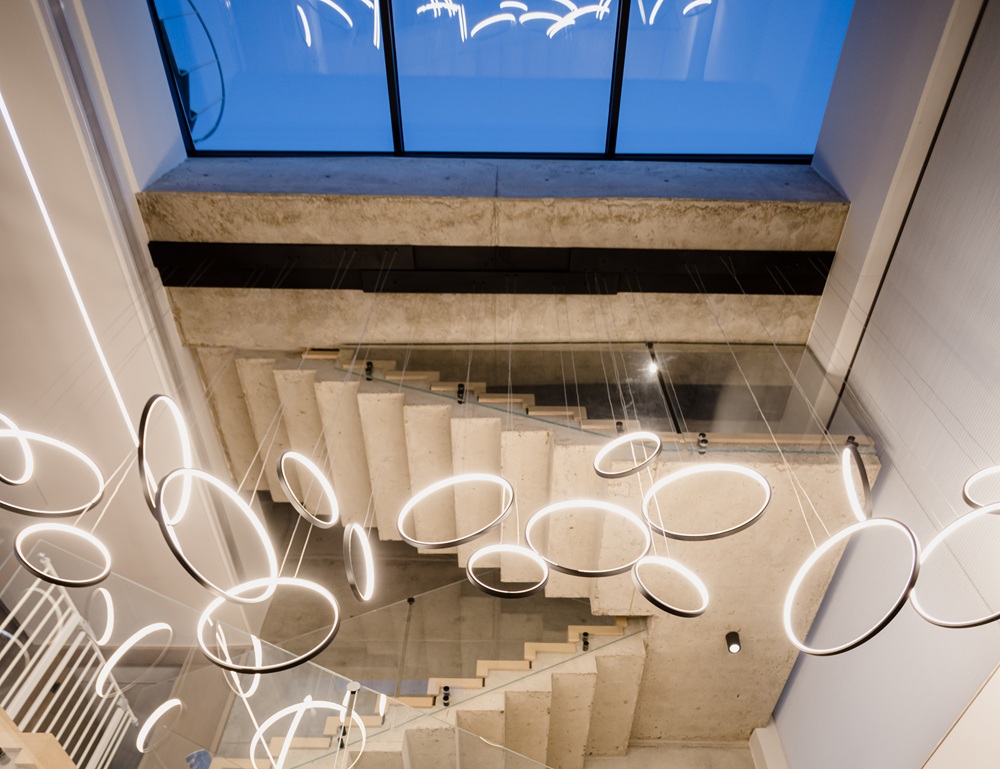
What sets The Grey House apart is not only its geometry but also the clarity of its architectural language. Nashashibi uses materials in their purest form, celebrates the interplay of light through skylights and openings, and attains a startling harmony between Jordanian cultural sensibility and a distinctly contemporary design idiom. In the ongoing architectural history of Amman, The Grey House is not some flashy gesture, it is thoughtful design; an expression of precision, honest uses of materials, and modern elegance. It is a testament to a new generation of Jordanian architecture: rooted in the land, yet confidently reaching outward. Mario Pisani