ATELIER(S) ALFONSO FEMIA, LA CITTÀ
PARCO, BY MARIO PISANI
©Atelier(s) Alfonso Femia
With the full support of the City Council, this renowned architectural firm
has proposed a strategic project, which, after decades of stagnation, aims to
radically transform an essential part of the city, getting rid of what is
basically a ‘wound’: in other words, a historic fracture in the entire area.
The plan actually focuses on connecting two key central areas that are
currently heavily compromised, transforming them into the new hub of the city.
We’re talking about Piazza del Popolo. It now appears to be covered by a huge
stretch of asphalt that spreads over five hectares, serving as a parking lot.
The proposal goes beyond the square to include the Orti Folconi, a complex covering
over three hectares that has turned into an illegal dumping ground bordering along
the train station over on the far side of Letimbro river.
Upstream of the project, Femia and his team have devised a theoretical reflection on what is happening to the urban fabric of our cities that could serve as an example for similar situations left abandoned. This means of operating derives from a certain mix of phenomena arising from the economic/financial crisis triggered off by the consequences of the pandemic. It also takes into account climate change and new technologies emerging in modern-day society.
©Atelier(s) Alfonso Femia
If all of this is to succeed it will require a real paradigm shift focused
on once again making the city a product of some sort of powerfully shared
collective consciousness. After all, this is what happened in times gone by,
when decisions were made to build cathedrals or town halls.
©Atelier(s) Alfonso Femia
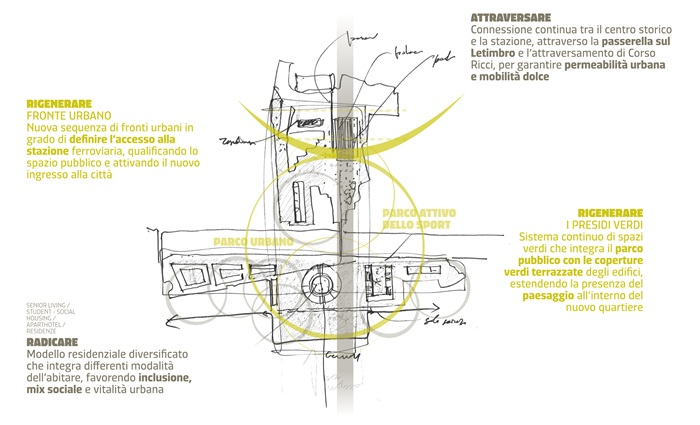
Based on these assumptions, they have come up with an idea developed along
three main lines. Firstly rooting, i.e. respecting and preserving the
past in a way that holds onto a place’s identity. Then crossing to
develop active and permeable tools that foster connections between neighbourhoods.
And thirdly regenerating, which means adapting spaces to contemporary plans
and purposes.
©Atelier(s) Alfonso Femia
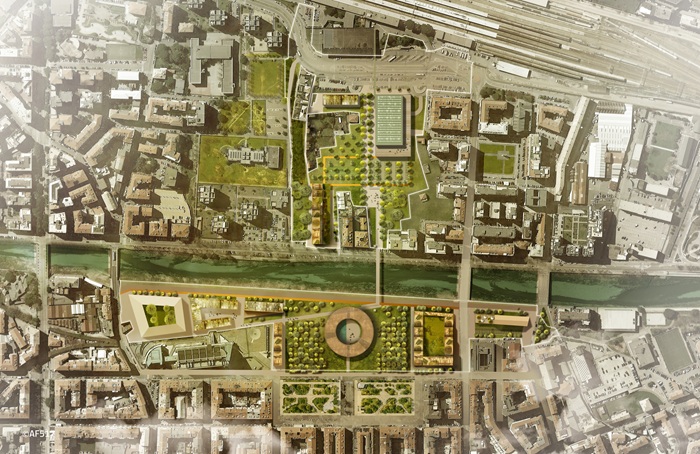
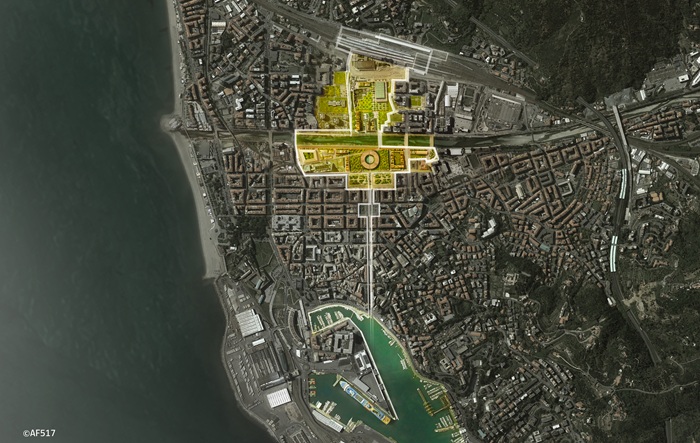
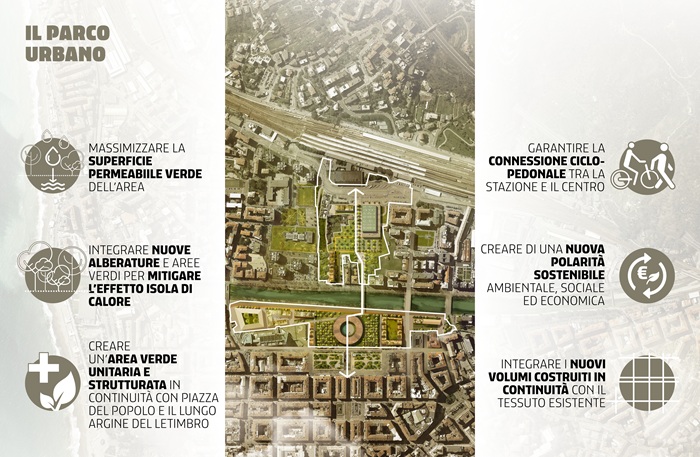
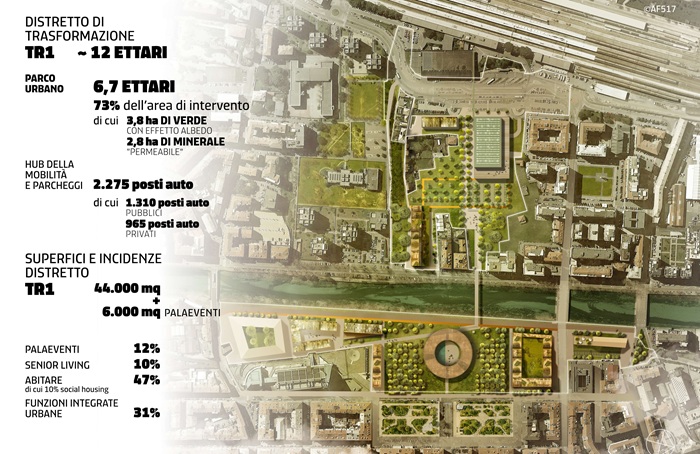
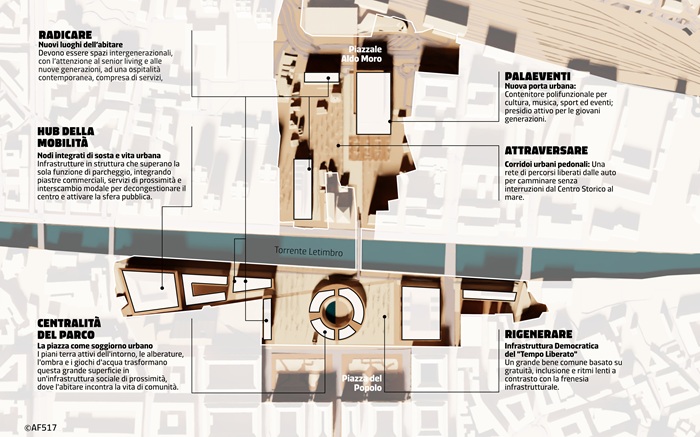
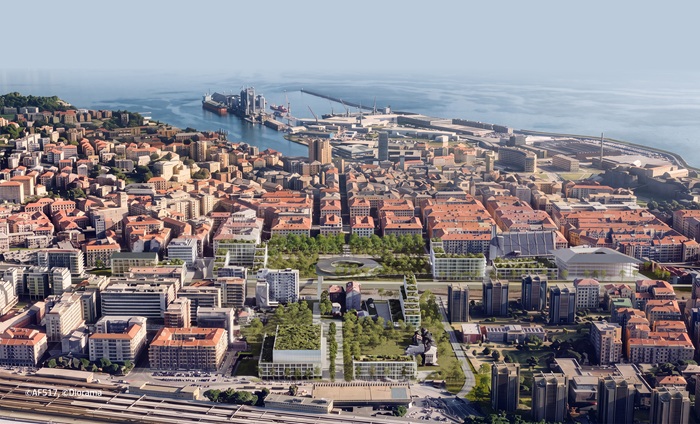
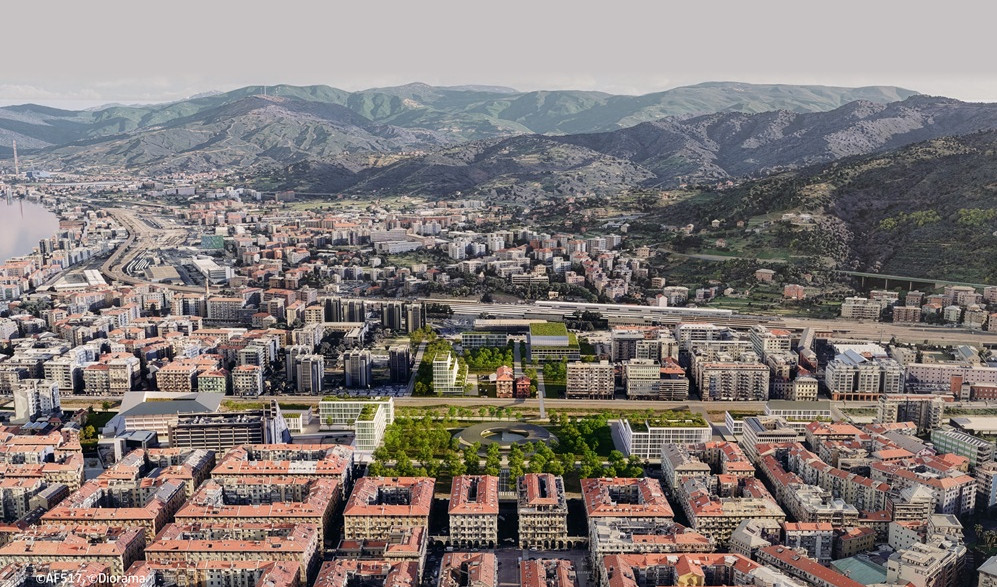
The masterplan creates a connection linking Orti Folconi to the two river banks that crosses Piazza del Popolo and extends to Priamar Fortress and the sea, restoring the city to its inhabitants. This is achieved by building an inner-city park of 67,000 square meters covering 73 percent of the entire project area. In addition to its role as a social gathering space and a connector between the station, old city centre and marina, a new green lung will ensure that the city centre and coastline form a seamless ecosystem in line with the principles of Nature Based Solutions (NBS). This involves removing the existing pavement to implement sustainable drainage systems by adding specific flooding hotspots for water management purposes.
©AF517
There will also be green roofs, parks and tree-lined avenues. The proposed project pays great attention to the presence of water, includes a liquid loop in the park, and a pedestrian and cycling bridge to connect the two banks of the Letimbro, as well as the planting of typical Mediterranean species to mitigate the climate. There will also be an events arena and a series of multigenerational housing units designed to be new attractions.
©AF517, ©Diorama”
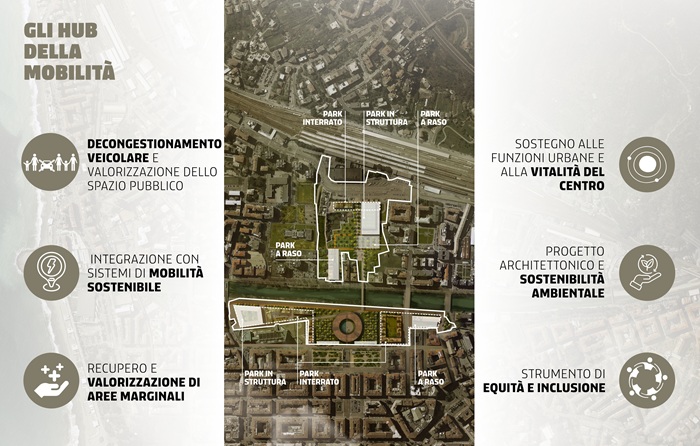
The events arena stands in front of the station and will be an authentic city access infrastructure for sport, entertainment, music, shows and conferences. It fills a historical gap for Savona and will be a real tourist attraction. It can be reached from the station via a walkway and will also provide underground parking. The roof will also host outdoor activities. Housing is also being rethought with a focus on projecting a powerful sense of social identity and multigenerational living thanks to senior living facilities. The old city fabric is being reused by creating a riverside front that will feature a rage of commercial spaces, while sustainable mobility is being developed along pedestrian access routes and a network of traffic-free urban corridors leading all the way to Priamar Fortress and the sea. Mario Pisani
Ownership: Binario
Blu, Orti Folconi Group (Management Centers, Edilsa Real Estate, Selena); Project:
Atelier(s) Alfonso Femia; Architect: Alfonso Femia; Urban
planning and design coordination: Simonetta Cenci; Project managers: Jessica
Emma Manzoni, Elettra Spiccio; Project team: Alfonso Femia, Simonetta
Cenci, Jessica Emma Manzoni, Elettra Spiccio, Fabio Marchiori, Alfonso Marotta,
Sara Gottardo, Sara Massa, Giovanni De Grandi, Stefano Cioncoloni, Carola
Picasso; Landscape: Atelier(s) Alfonso Femia, Michelangelo Pugliese; Strategic
mobility consulting: MIC-HUB; Images: ©AF517, ©Diorama