LYT-X STUDIO, BRISE-VENT
HAVRE HARBOR MUSEUM, FRANCE
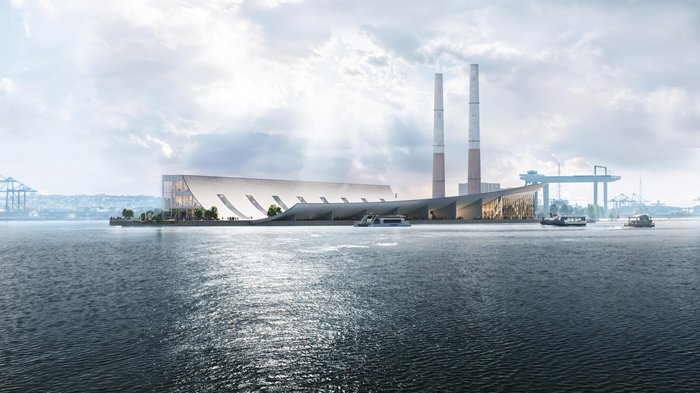
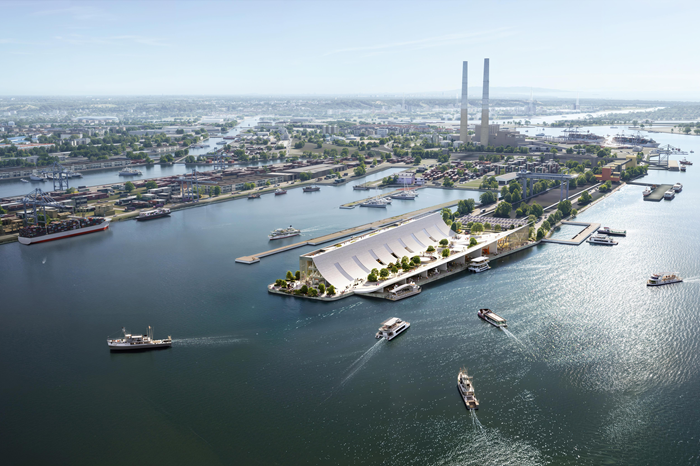
Brise-Vent Harbour Museum explores how an industrial port can be reconfigured into a public cultural facility. The program includes permanent and temporary exhibition spaces, a performance hall, flexible cultural/event spaces, and outdoor public areas that are connected to the portside.
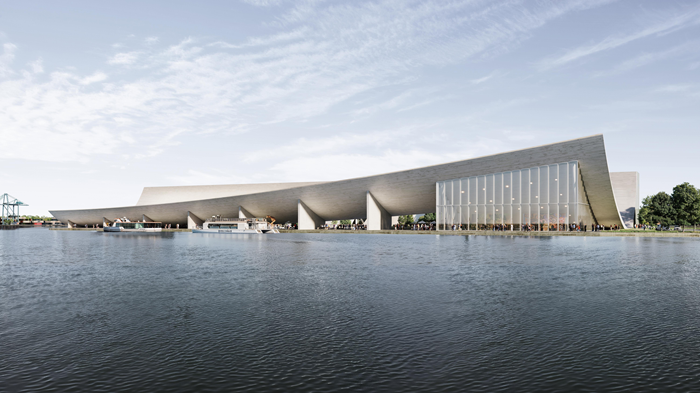
The site is located in the old port area which, as port functions have gradually evolved ad transformed, lost its original purpose and became disconnected from everyday urban life. Preserving the existing building as a historical landmark, the project introduces new architectural features designed to enable it to accommodate more people.
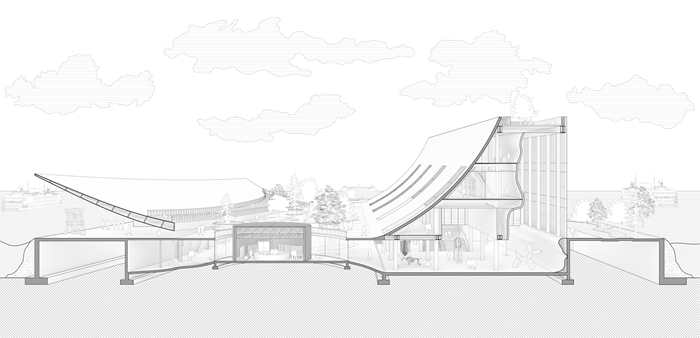
The architectural layout creates a seamless sequence of space connecting together the city, waterfront and harbour. The public pathways are designed to allow circulation through and around the site, knitting the museum into the urban network of the waterfront.
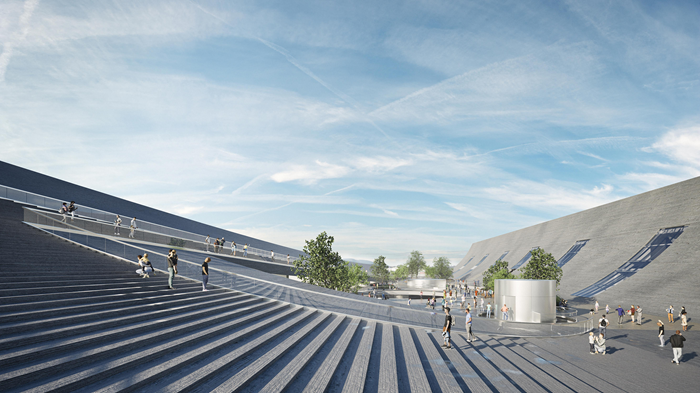
One of the project’s key architectural features is an extension to the old curved roof, which extends into a continuous canopy along the quay. This roof helps coordinate circulation, creates shaded outdoor spaces, and establishes a spatial transition between the urban pathways and port operations. There are a series of semi-open public spaces and a covered courtyard beneath this extended canopy, allowing access both from the city and water.
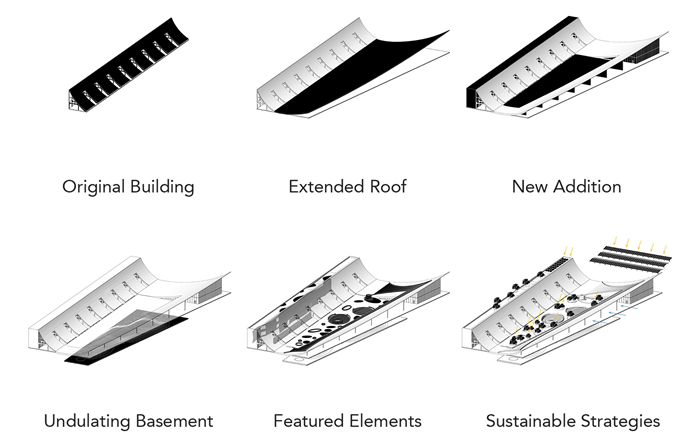
The courtyard is accessible even outside the museum's opening hours, allowing the site to function as an open civic space. The boundaries between the indoor and outdoor spaces are marked by spatial continuity rather than by visual transparency alone.
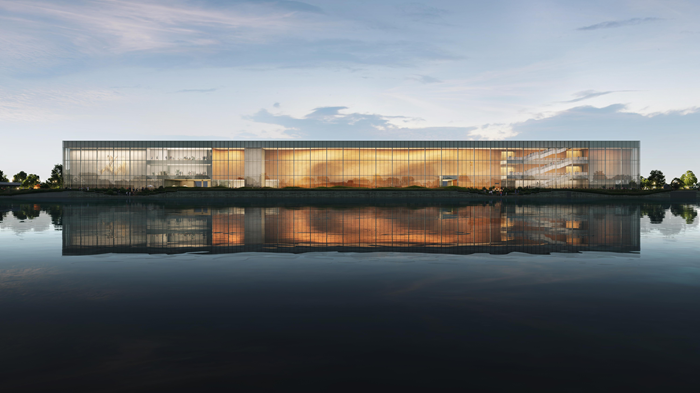
Environmental factors are incorporated by keeping the old structure and confining new building work. The large canopy provides passive shading and helps moderate microclimatic conditions along the waterfront. The courtyards and apertures in the roof bring natural light into the interior spaces, while ventilation strategies take advantage of coastal breezes.
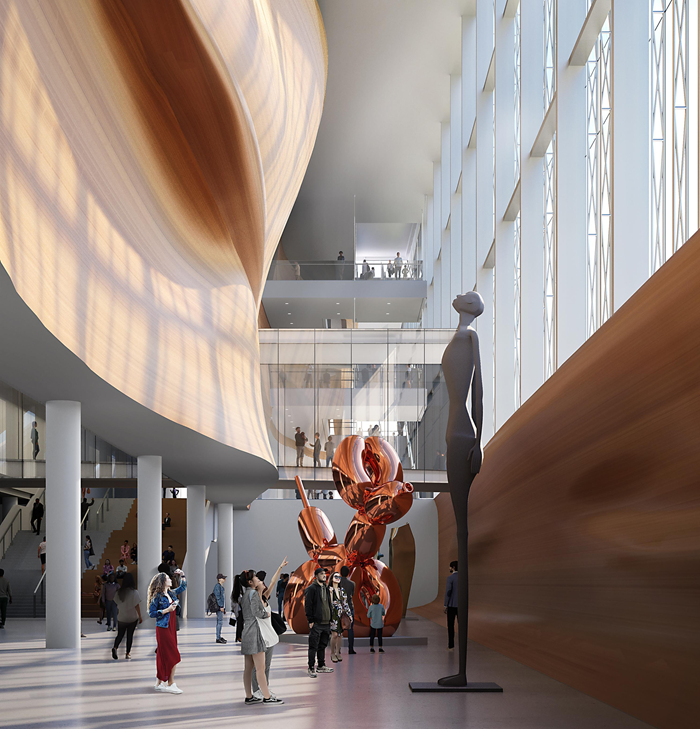
Projet: Lyt-X Studio, Dingdong Tang, Zehui Li, Haisheng Xu; Area: 31000 m²; Structure: Steel and reinforced concrete; Facade: Glass curtain wall system with extended curved roof canopy