HOTEL CINQ ETOILES
PIETRIARCHITECTES, HOTEL LES
ROCHES, LE LAVANDOU, FRANCE
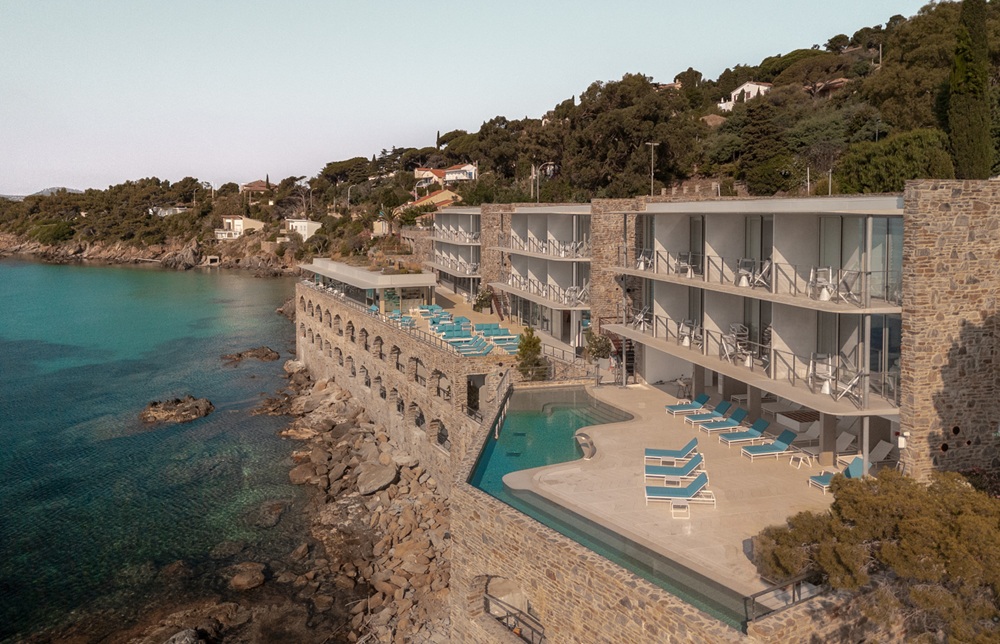
Dans la commune du Lavandou, niché à flancs de rochers et directement en contact avec la Méditerranée, l’Hôtel les Roches, est l’un des récents projets réalisés par Jean Baptiste Pietri, architecte d’origine marseillaise à la tête de l’agence parisienne PietriArchitectes. La nouvelle structure ***** de 40 chambres nait de la reconstruction d’un ancien hôtel des années 1930, l’emblématique hôtel des “Roches fleuries”, fréquentée par une clientèle raffinée de la haute société. Après plusieurs remaniements et fragmentation, l’hôtel est devenu obsolète et techniquement inadapté aux exigences contemporaines, tout en conservant une forte mémoire, avec un socle en pierre voûté, presque troglodyte, descendant jusqu’à la mer. Avec l’acquisition en 2009 par un groupe hôtelier familial français, la décision de reconstruire intégralement l’hôtel s’est imposée, pour offrir un nouveau lieu à la hauteur du site, sans en trahir l’esprit.
Nestling on
rocky slopes overlooking the Mediterranean in the town of Le Lavandou in the
south of France, Hôtel les Roches is one of the latest projects designed by
Jean-Baptiste Pietri, a Marseille-born architect heading the Parisian firm PietriArchitectes.
This new five-star hotel with 40 rooms is the result of the renovation of an
old 1930s hotel, the iconic Hôtel des Roches Fleuries, once frequented by the
jet set of the day until the post-war period. After several renovations and alterations,
the hotel lost its charm and looked rather outdated and technically unsuitable
for contemporary needs, despite its privileged location and its eye-catching stone
base leading down to the sea. After being taken over by a private French hotel group in 2009, the
decision was made to completely rebuild the hotel into an exclusive new five-star
facility
Nel villaggio Le Lavandou nel sud della Francia, adagiato sui pendii
rocciosi e affacciato direttamente sul Mediterraneo, l'Hôtel les Roches è uno
dei recenti progetti realizzati da Jean-Baptiste Pietri, architetto di origine
marsigliese a capo dello studio parigino PietriArchitectes. Il nuovo hotel cinque
stelle, con 40 camere, è il risultato della ristrutturazione di un ex albergo
degli anni '30, l'iconico Hôtel des Roches Fleuries, frequentato dal jet set
del tempo fino al secondo dopoguerra. Dopo diverse ristrutturazioni e
frammentazioni, l'hotel perse il suo charme diventando obsoleto e tecnicamente
inadatto alle esigenze contemporanee, nonostante la sua posizione privilegiata e
il suo caratteristico basamento in pietra che scende verso il mare. Con la sua
acquisizione nel 2009 da parte di un gruppo alberghiero francese privato, si è
imposta la decisione di ricostruire completamente l'hotel per offrire una nuova
struttura 5 stelle esclusiva.
« Notre première
intention architecturale – explique Jean-Baptiste Pietri – a été de recomposer
une unité cohérente dans un site morcelé par les ajouts successifs et les
strates du temps, tout en affirmant une grande légèreté dans la perception.
L’enjeu n’était pas seulement de dessiner un hôtel, mais de le faire tenir dans
un terrain complexe, fortement dénivelé, contraint par son environnement bâti
et naturel, et exposé à la mer. Chaque bâtiment a été pensé comme un élément
autonome, imbriqué avec précision dans la topographie, dans une logique
d’assemblage sophistiquée qui évite toute artificialité ».
"Our primary architectural aim," so Jean-Baptiste Pietri noted, "was to recreate a coherent whole on a site that had been disrupted by a sequence of additions and the passage of time, while simultaneously conveying a sense of lightness. The challenge was not simply to design a hotel but to integrate it into a complex location with steep slopes constrained by both the built and natural environment and exposed to the sea. Each building was designed to be an independent entity carefully integrated into the topography by means of a sophisticated assembly method that avoids any sense of artificiality."
"Il nostro intento architettonico primario", spiega Jean-Baptiste
Pietri, "era quello di ricreare un insieme coerente all'interno di un sito
frammentato da aggiunte successive e dal passare del tempo, trasmettendo al
contempo un senso di leggerezza. La sfida non era semplicemente progettare un
hotel, ma integrarlo in un terreno complesso, in forte pendenza, vincolato dal
suo ambiente costruito e naturale, ed esposto al mare. Ogni edificio è stato
concepito come un elemento autonomo, integrato con precisione nella topografia,
utilizzando una sofisticata logica di assemblaggio che evita qualsiasi
artificialità".
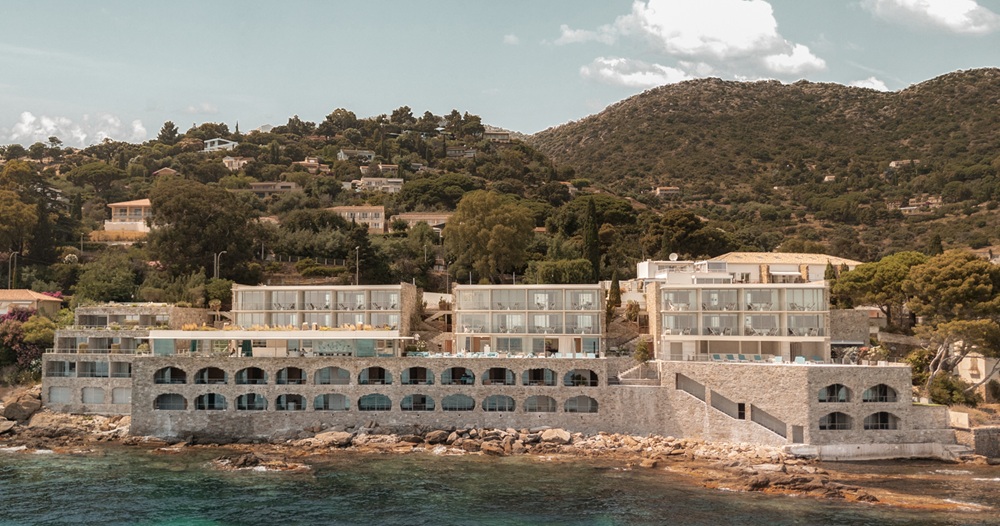
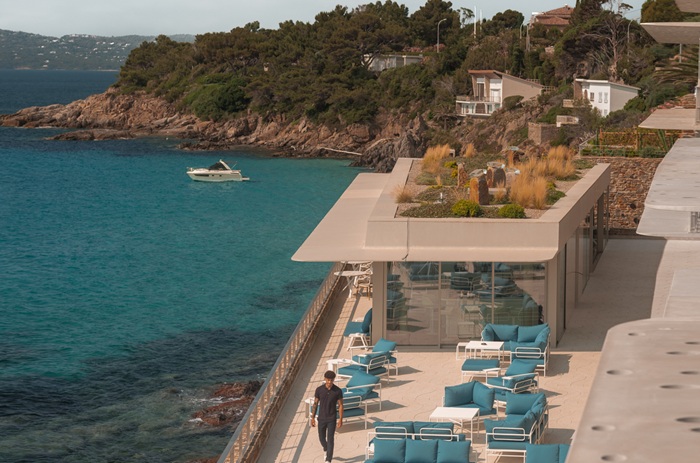
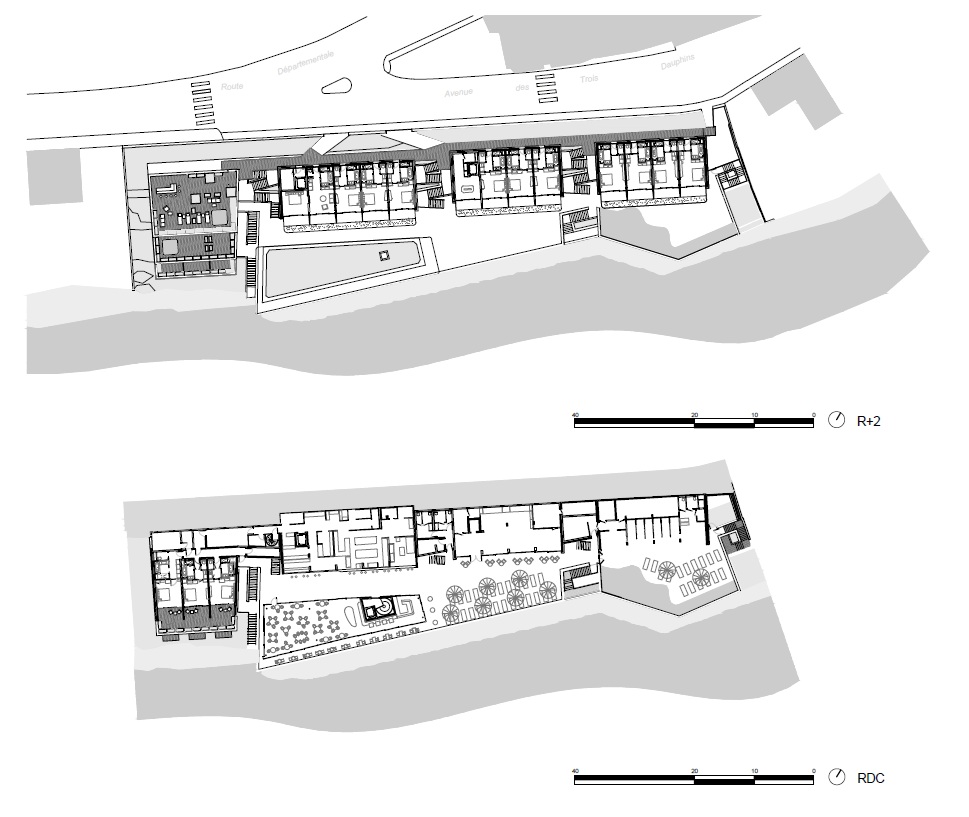
Le projet repose sur une double lecture du paysage : un monde bas, massif, protecteur, et un monde haut, fragmenté, plus léger. Le socle, ancré dans la pente, abrite les chambres les plus proches de l’eau, pensées comme des cabanes de pierre – un hommage direct à l’architecture vernaculaire du littoral. Il accueille également les espaces communs : accueil, restaurant, piscine, solarium. En surplomb, quatre volumes autonomes, reliés par des passerelles et séparés par des failles végétalisées, s’élèvent dans le relief. Cette fragmentation permet une meilleure insertion paysagère, une respiration entre les masses bâties, et un rapport fluide entre l’architecture, la lumière et la végétation.
The project is based on a double reading of the landscape: a low, solid, and protective setting and a higher, fragmented, light environment. The base, anchored to the slope, houses the rooms closest to the water designed like stone cabins, a direct homage to the vernacular architecture along the coast. The communal spaces are also set in the base: reception, restaurant, swimming pool, and solarium. Four independent structures connected by walkways and separated by landscaped cavities rise up from the ground to overlook the surrounding landscape. This fragmentation ensures better integration into the location, creating breathing space between the built structures and promoting fluid interaction between architecture, light, and vegetation.
Il progetto si basa su una duplice interpretazione del paesaggio: un mondo
basso, solido e protettivo, e un mondo più alto, frammentato e leggero. Il
basamento, ancorato al pendio, ospita le camere più vicine all'acqua, pensate
come cabine in pietra, un omaggio diretto all'architettura vernacolare della
costa. In questo basamento sono inoltre organizzati gli spazi comuni:
reception, ristorante, piscina e solarium. Quattro volumi indipendenti,
collegati da passerelle e separati da intercapedini piantumate, si innalzano
nel terreno affacciandosi sul paesaggio. Questa frammentazione consente una
migliore integrazione nel sito, crea uno spazio di respiro tra le masse
costruite e favorisce un rapporto fluido tra architettura, luce e vegetazione.
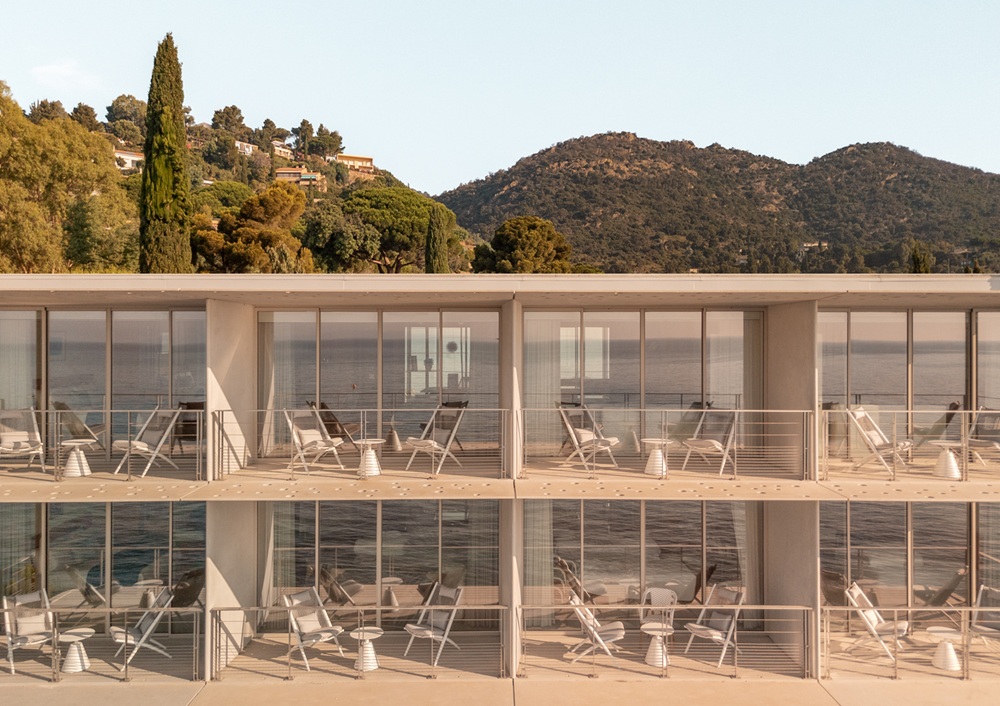
La matérialité du projet
participe pleinement de son intégration. Le socle, habillé de pierre de Bormes,
assure également la stabilité face aux éléments naturels, formant une base
solide sur laquelle repose une plateforme – le niveau de vie de l’hôtel – qui
regroupe l’accueil, le restaurant, la piscine et les espaces communs. En
contraste, les étages supérieurs se distinguent par des débords de dalle en
béton fibré à ultra-hautes performances (BFUP), aux lignes fines et aux
percements circulaires qui filtrent la lumière. Les failles entre les bâtiments
et les toitures sont entièrement végétalisées, prolongeant le paysage naturel
jusque dans l’architecture.
Materials play a key role in how the building fits into its setting. The base, clad in Bormes stone widely found in this area, also ensures stability against the elements, forming a solid foundation supporting a platform – the floor of the hotel's communal spaces – housing the reception, restaurant, swimming pool, and congregation areas. The upper floors stand out for their floors made of ultra-high-performance fibre-reinforced concrete (UHPFRC) featuring slender lines and circular openings that filter the light. The gaps between the buildings and roofs are fully landscaped, bringing nature inside the building.
La materialità del progetto gioca un ruolo cruciale nella sua integrazione.
Il basamento, rivestito in pietra di Bormes, tipica del luogo, garantisce
inoltre stabilità rispetto agli agenti atmosferici, formando una solida base su
cui poggia una piattaforma – il piano degli spazi comuni dell'hotel – che
ospita la reception, il ristorante, la piscina e gli ambienti di ritrovo. I
piani superiori si distinguono per gli aggetti dei piani in cemento
fibrorinforzato ad altissime prestazioni (UHPFRC), caratterizzati da linee
slanciate e aperture circolari che filtrano la luce. Le faglie tra gli edifici
e le coperture sono interamente piantumati, innervando all’interno
dell’edificio il paesaggio naturale.
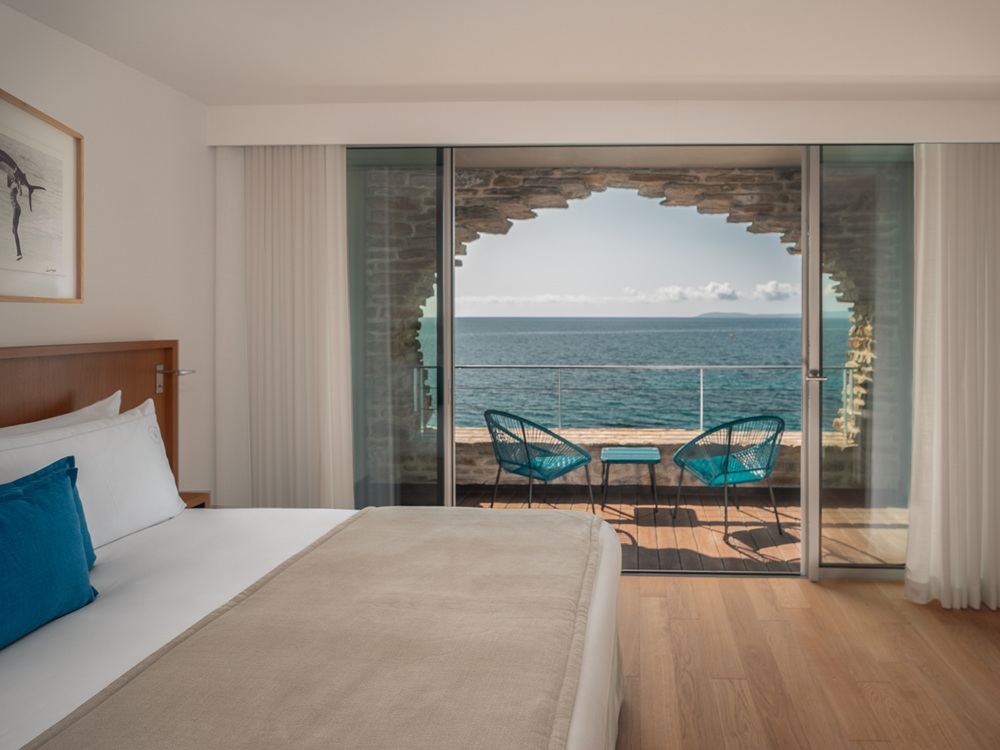
L’architecture méditerranéenne a
guidé la démarche, non comme un style figé, mais comme une culture
constructive, faite de murs épais, de percements maîtrisés, de matériaux
durables et d’ombres portées. La fragmentation des volumes, loin d’être un
effet, est une stratégie d’intégration, une manière d’habiter le relief sans le
dominer, de sculpter les masses plutôt que de les imposer. Le projet multiplie
les cadrages sur le paysage, articule les vues, organise les circulations à
travers un système de passerelles, de socles et d’escaliers qui participent
pleinement de la composition. La végétation est réintroduite comme matière
d’architecture, enveloppant les structures, filtrant les perspectives, et
prolongeant le bâti dans le vivant.
Mediterranean architecture guided the design process, not as an imposed style but as a style of building characterized by thick walls, carefully positioned openings, durable materials and shading. The structural fragmentation is a means of integration, a way of inhabiting the landscape without dominating it, of sculpting masses rather than imposing them. The design multiplies framed views of the landscape, articulates perspectives, and organises circulation through a system of walkways, plinths and stairs that are an integral part of the overall design. Landscaping is reintroduced as an architectural feature that wraps around structures, filters perspectives and project the builtscape into the living world.
L'architettura mediterranea ha guidato il processo di progettazione, non come uno stile imposto, ma come una cultura costruttiva caratterizzata da muri spessi, aperture accuratamente posizionate, materiali durevoli e ombre proiettate. La frammentazione dei volumi, è una strategia di integrazione, un modo di abitare il paesaggio senza dominarlo, di scolpire le masse anziché imporle. Il progetto moltiplica le viste inquadrate del paesaggio, articola le prospettive e organizza la circolazione attraverso un sistema di passerelle, plinti e scale che sono parte integrante della composizione. La vegetazione viene reintrodotta come elemento architettonico, avvolgendo le strutture, filtrando le prospettive ed estendendo l'ambiente costruito al mondo vivente.
Client: Private; Project: PietriArchitectes; Executive architects: Agence Rolland JJ, Atelier 54, Phase 3, NJN; Structural engineering: STE IC 42; Fluids: GBI; Landscape: Derbez Paysage; Photo: Nicolas Anetson