BY MARIO PISANI
BACH, REINA SOFÍA MUSEUM CINEMA AND AUDITORIUM, MADRID, SPAIN
Le Musée national centre d'art Reina Sofía est installé dans l'ancien Hôpital général de Madrid, construit au XVIIIe siècle par José de Hermosilla et Francisco Sabatini. Entre 1980 et 1988, José Luis Iñiguez de Onsoño et Antonio Velázquez de Castro ont supervisé la restauration et la réorganisation des espaces. L'extension de 8 000 mètres carrés, achevée en 2005, a été conçue par Jean Nouvel. Le musée, qui abrite la grande toile de Picasso Guernica, avait besoin d'un espace audiovisuel pour enrichir son offre. Le projet modifie l'entrée et l’auditorium et utilise de nouveaux matériaux afin d'améliorer les performances acoustiques et visuelles des nouveaux systèmes.
The Museo Nacional Centro de Arte Reina Sofía was set up in the former General Hospital of Madrid built in the 18th century by José de Hermosilla and Francisco Sabatini. José Luis Iniguez de Onsoño and Antonio Velasquez de Castro oversaw the restoration and redesign of the spaces from 1980-1988. The 8,000 sqm expansion, completed in 2005, was designed by Jean Nouvel. The museum, which houses Picasso's huge painting Guernica, was in need of an audiovisual space to extend its amenities.
Il Museo Nacional Centro de Arte Reina Sofía si è insediato nell'ex Ospedale Generale di Madrid, realizzato nel XVIII secolo da José de Hermosilla e Francisco Sabatini. Tra il 1980 ed il 1988 José Luis Iniguez de Onsoño e Antonio Velasquez de Castro hanno curato il restauro e il ridisegno degli spazi. L’ampliamento di 8.000 metri quadri completato nel 2005, si deve a Jean Nouvel. Ora occorre dotare il museo, che accoglie Guernica, la grande tavola di Picasso, di uno spazio per gli audiovisivi per ampliare le offerte del museo.
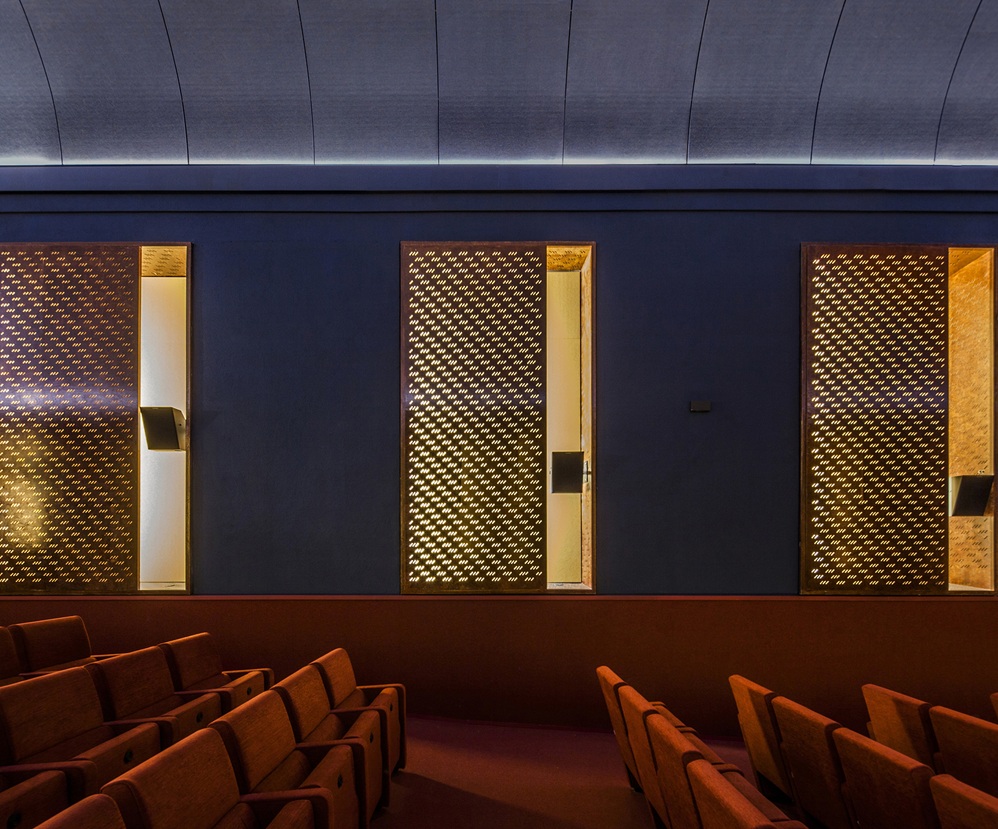
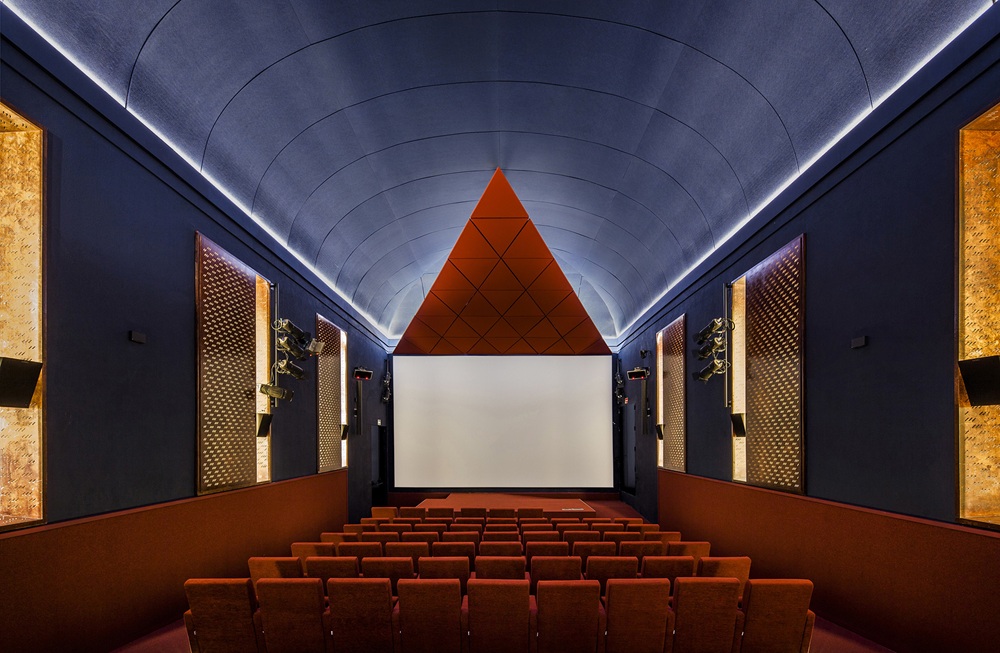
L’ancien auditorium conçu par Jaume Bach et Gabriel Mora en 1987, est agrandi et transformé en salle de cinéma, tout en préservant les éléments emblématiques d'origine : la salle de projection et le triangle suspendu au-dessus de la scène, un dispositif de réverbération. Les cabines de traduction, devenues inutiles avec les nouvelles technologies, ont été supprimées. Les gradins ont été modifiés pour accentuer l'inclinaison et améliorer la visibilité de l'écran. Le triangle suspendu est devenu un grand écran acoustique masquant les haut-parleurs. La nouvelle salle conserve le caractère d'« objets géométriques » sous la voûte, qui représentait à l'origine un ciel étoilé, comme l'avait suggéré Leon Battista Alberti. Les anciennes fenêtres ont été modifiées et fermées par des panneaux de bois sculptés aux motifs évoquant des gouttes de pluie, comme si l'on était à l'extérieur, et la couleur bleue, identique à celle du ciel étoilé. Le rouge classique rappelle celui du cinéma Skandia, d'Erik Gunnar Asplund à Stockholm, et du cinéma Doré à Madrid.
This was achieved by altering the entrance and main hall and upgrading the room materials to improve the acoustics and visuals of the new systems. Jaume Bach and Gabriel Mora designed an auditorium in 1987. Two new spaces converted the existing facility into a cinema and auditorium while retaining certain old iconic features: the projection room and suspended triangle above the stage, which is actually a reverberation device. The translation booths, now unnecessary due to new technology, have been removed. The seating area was also modified to make it steeper and improve screen visibility. The hanging triangle has been converted into a large acoustic screen that conceals the speakers. The new hall is still reminiscent of 'geometric objects' under a vaulted space, which originally featured a starry sky, as suggested by Leon Battista Alberti. The old windows have been altered by being enclosed by wooden panels carved with patterns that look like raindrops as if the panels were outdoors. They have been painted the same blue colour as the starry vault. The classic red colour is like Skandia Cinema in Stockholm designed by Erik Gunnar Asplund and the Doré in Madrid.
Il progetto ha modificato l'ingresso e l’aula, i materiali di sala per migliorare le prestazioni acustiche e visive dei nuovi sistemi. Nel 1987 vi era un auditorium progettato da Jaume Bach e Gabriel Mora. Due nuovi spazi hanno convertito l’esistente in cinema e auditorium, conservando gli elementi iconici precedenti: la sala di proiezione e il triangolo sospeso sopra il palco, un dispositivo di riverbero. Le cabine di traduzione, inutili con la nuova tecnologia, sono state rimosse. Modificata la platea per aumentare l'inclinazione e migliorare la visibilità dello schermo. Il triangolo sospeso è divenuto un grande schermo acustico che maschera gli altoparlanti. La nuova sala mantiene il carattere di "oggetti geometrici" sotto lo spazio a volta, che in origine prevedeva un cielo stellato, come suggerisce Leon Battista Alberti. Modificate le vecchie finestre, chiuse con pannelli di legno intagliati con motivi che evocano le gocce di pioggia come se fossero all'aperto e il colore blu, lo stesso della volta stellata. Il rosso classico riprende quello del Cinema Skandia di Stoccolma di Erik Gunnar Asplund e il Doré di Madrid.
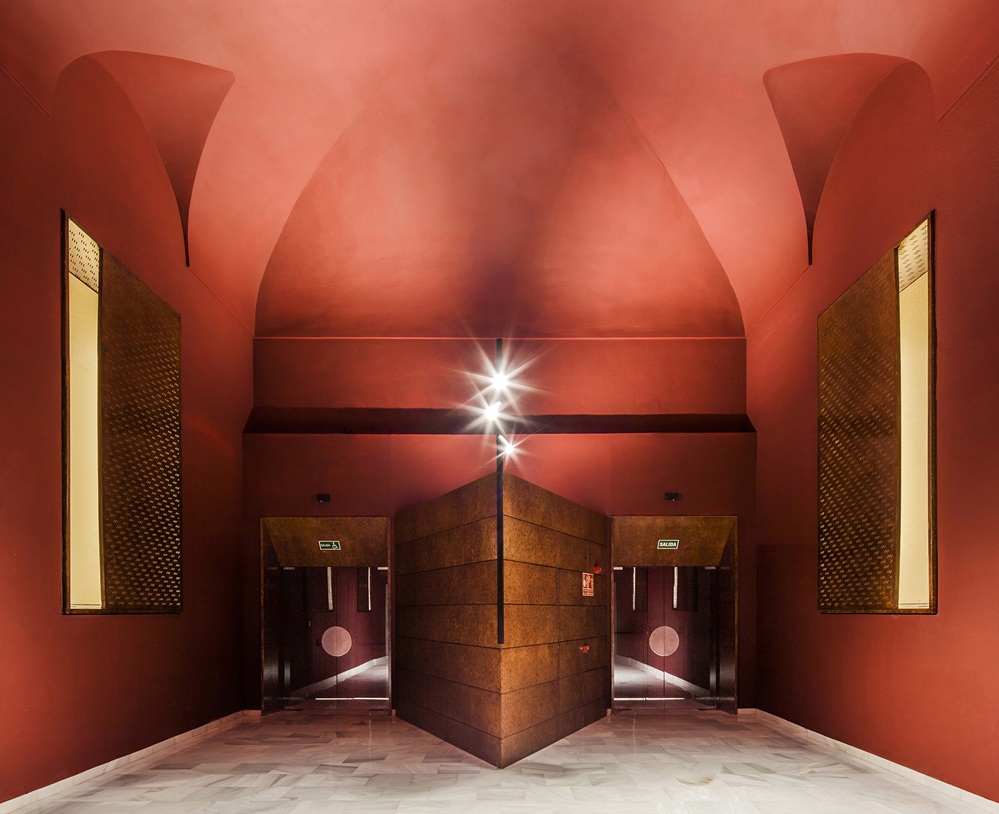
Le bleu et le rouge du tapis font écho aux théâtres classiques et soulignent la fonction de l'espace et la tradition du cinéma dans les bâtiments néoclassiques. Pour harmoniser ces deux tonalités, les surfaces absorbantes placées dans les niches diffusent une lumière douce, amplifiant la sensation d'être en plein air. Dans le hall d'entrée, un meuble de rangement triangulaire s'intègre à la géométrie de la cabine de projection et guide les visiteurs vers la sortie. L'arche de Serlian a été conservée, et toutes les surfaces, d'un rouge uniforme, accueillent les visiteurs et dévoilent la nouvelle salle qui se trouve derrière. Mario Pisani
The red and blue colour of the carpet is similar to the colour scheme of classical theatres to emphasise the space’s function and the tradition of neoclassical buildings housing film theatres. To mediate between the two colours, the sound-absorbent surfaces placed in the niches act as soft spotlights amplifying the feeling of being outdoors. A triangular storage unit in the entrance hall interacts with the geometric design of the projection booth and leads towards the exit. The Venetian window has been conserved and its various surfaces, all in one shade of red, welcome visitors and reveal the new hall behind it. Mario Pisani
Il blu e il rosso del tappeto appartengono ai teatri classici e sostengono la funzione dello spazio e la tradizione del cinema negli edifice neoclassico. Per mediare tra le due tonalità, le superfici assorbenti collocate nelle nicchie sono punti di luce soffusa, amplificando la sensazione di essere all'aperto. Nell'atrio d'ingresso, un mobile contenitore triangolare che dialoga con la geometria della cabina di proiezione e guida all’uscita. La serliana è stata mantenuta e le superfici tutte in un'unica tonalità di rosso che accoglie i visitatori e mostra la nuova sala dietro. Mario Pisani