
AEDAS, BERLIN, GERMANY
ATELIER LI XINGGANG,
BEIJING, VITAL ARCHITECTURE, THROUGH 18/3/2026
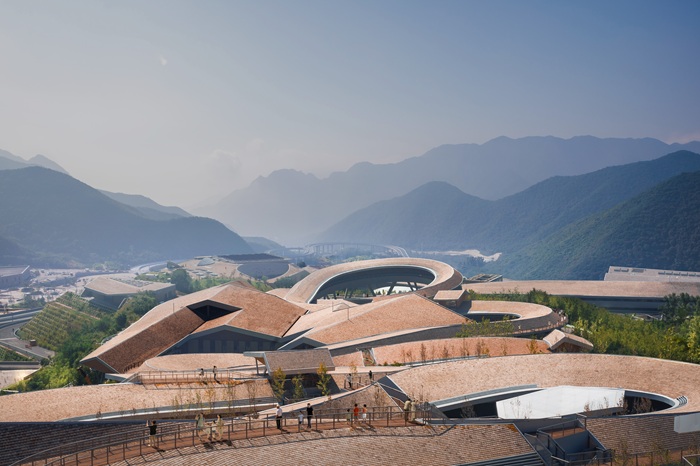
Nationales
Bob- und Rodelzentrum Yanqing im Wettkampfareal der Olympischen Winterspiele 2022 in Peking. ©
Atelier Li Xinggang
Aedes – Architecture and Space présente l'exposition ʺVital
Architectureʺ de Atelier Li Xinggang à travers une
sélection de projets chinois qui créent des espaces où nature et environnement
bâti fusionnent en un tout vivant. L’architecture y est envisagée comme une
interaction entre espace, environnement, histoire et expérience – un équilibre
entre idéal et réalité où le monde bâti joue un rôle de médiateur et de lien.
Aedes – Architecture and Space presents the exhibition, Vital Architecture by Atelier Li Xinggang through a selection of projects from China that create spaces where nature and the built environment merge into a living whole. Architecture is understood here as an interplay of space, environment, history and experience – a position between idealism and reality where the built world acts as a mediator and connector.
Aedes – Architecture and Space presenta la mostra, "Vital Architecture" di Atelier Li Xinggang attraverso una selezione di progetti provenienti dalla Cina che creano spazi in cui natura e ambiente costruito si fondono in un tutt'uno vivente. L'architettura è qui intesa come un'interazione tra spazio, ambiente, storia ed esperienza – una ruolo tra idealismo e realtà in cui il mondo costruito funge da mediatore e connettore.
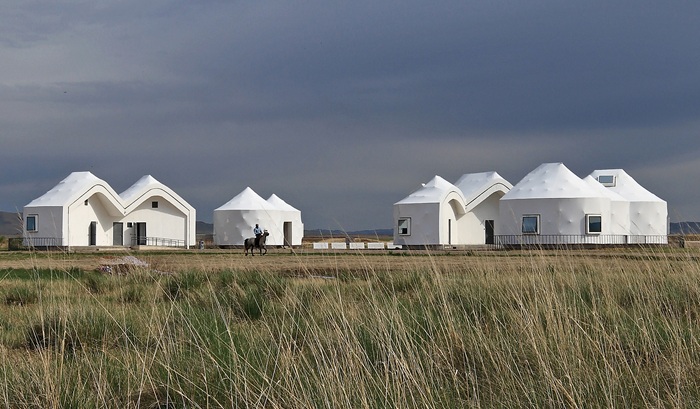
Visitor Center for the Site of Xanadu. © Zhang Guangyuan
La pensée architecturale de Li Xinggang s'inspire d'une étude approfondie des espaces urbains et paysagers historiques de la Chine. La vulnérabilité du bâti face à la nature, ainsi que la puissance spatiale des structures urbaines traditionnelles, constituent le fondement d'une conception de l'architecture comme un espace protecteur, structurant et émotionnellement puissant.
Li Xinggang's architectural thinking draws from intensive engagement with China's historic urban and landscape spaces. The vulnerability of the built in relation to nature, as well as the spatial power of traditional urban structures, form the background for a position that understands architecture as protective, ordering and emotionally effective space.
Il
pensiero architettonico di Li Xinggang trae origine da un intenso confronto con
gli spazi urbani e paesaggistici storici della Cina. La vulnerabilità del
costruito in relazione alla natura, così come la potenza spaziale delle
strutture urbane tradizionali, costituiscono il contesto per un approccio che
concepisce l'architettura come uno spazio protettivo, ordinatore ed
emotivamente efficace.
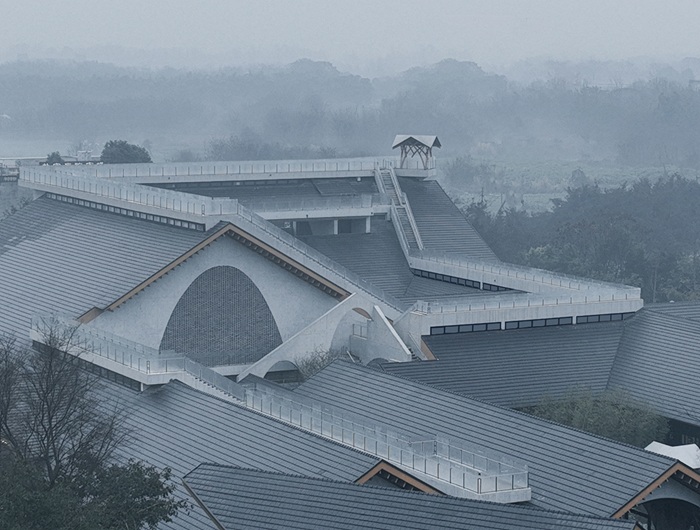
Anren
Culture Center for Sect of Great Craftsman © Schranimage
L'exposition, jusqu’au 18 mars 2026, organise les projets selon cinq stratégies spatiales : Jardins introvertis en ville ; Symbiose du neuf et de l'ancien sur des « ruines » ; Structures dans des environnements déconnectés du contexte ; Habitats groupés basés sur des unités structurales et spatiales ; Architecture en harmonie avec le paysage topographique.
The exhibition at Aedes until 18 March 2026, organises the projects into five spatial strategies: Introverted Gardens in the City; Symbiosis of the New and the Old on 'Ruins'; Structures in Context-Deficient Environments; Clustered Shelters Based on Structural-Spatial Units; Architecture Merging with Topographical Landscape.
La mostra, fino al 18 marzo 2026, organizza i progetti in cinque strategie spaziali: Giardini introversi in città; Simbiosi tra nuovo e vecchio su "rovine"; Strutture in ambienti carenti di contesto; Rifugi raggruppati basati su unità strutturali-spaziali; Architettura che si fonde con il paesaggio topografico.
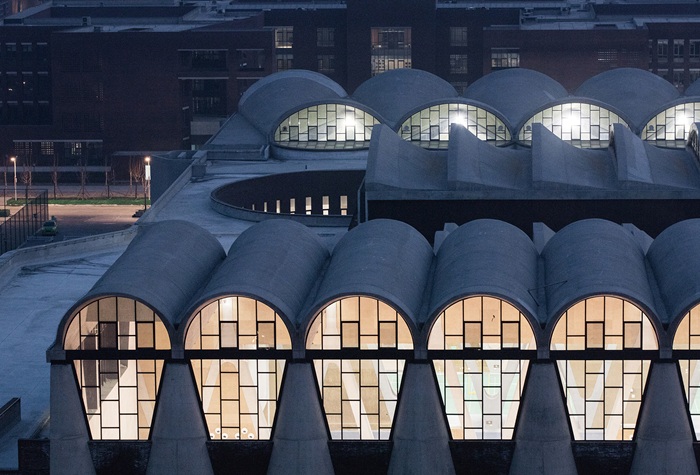 Gymnasium
on the new campus of Tianjin University © Sun Haiting
Gymnasium
on the new campus of Tianjin University © Sun Haiting