
GOD’S URBAN ARTISTS
MONITOR BY MICHELE BAZAN GIORDANO
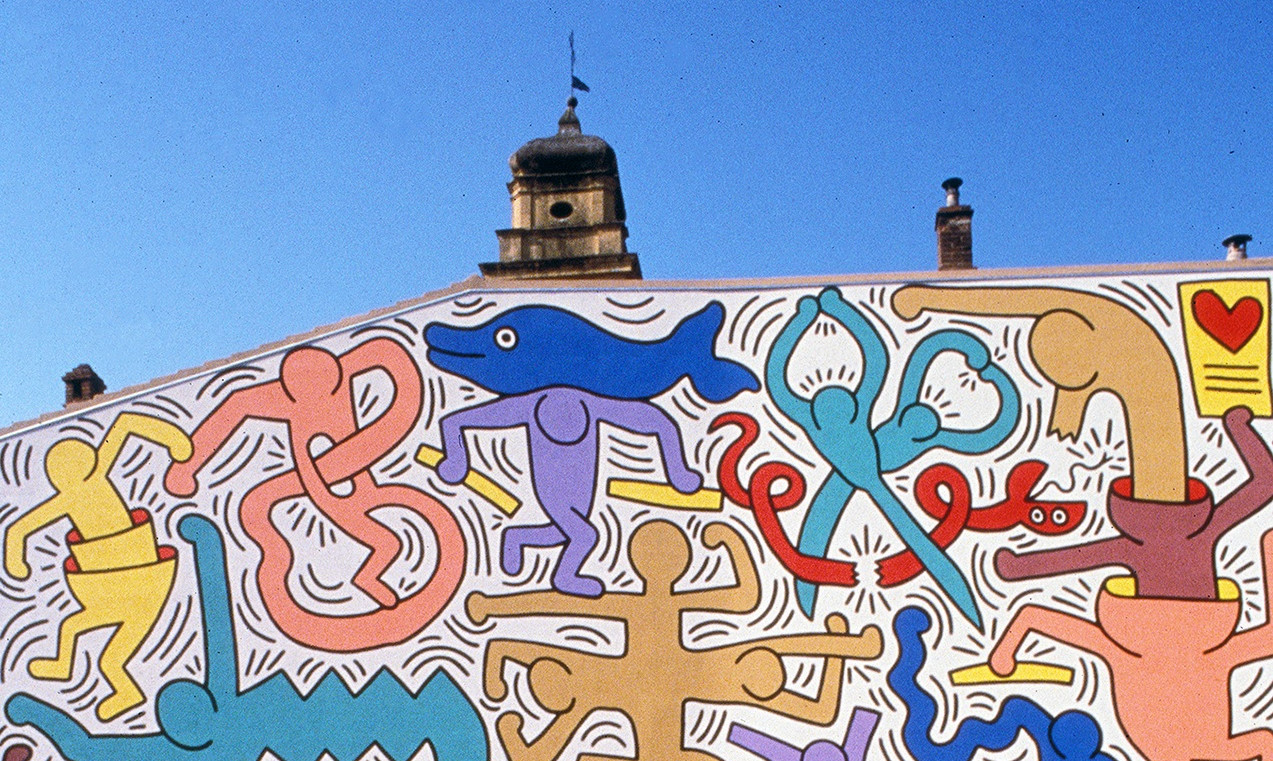
Keith Haring ,Tuttomondo, Pisa (Italy)
Il existe souvent une certaine confusion, compréhensible, entre Street art, néo-muralisme et graffiti. Le graffiti désigne des inscriptions (souvent volontairement illisibles) réalisées par des graffeurs, apparues dans les années 1970 avec les tags américains (toujours illégaux). Le néo-muralisme, quant à lui, est un phénomène plus récent : des œuvres très figuratives (souvent hyperréalistes) de grande dimension, autorisées. Leur création nécessite des installations considérables (échafaudages, barrages routiers, grandes quantités de peinture) et est généralement de nature moralisatrice et éducative. Tout ce qui ne correspond pas à ces deux catégories est appelé Street art et a vu le jour dans les années 1980.
There is often a certain understandable confusion about what counts as street art, neo-muralism and graffiti. Graffiti is a kind of writing (often intentionally illegible) originating from (illegal) 1970s tags in the USA. Neo-muralism, on the other hand, is a more recent phenomenon: very figurative (often hyper-realistic) large-scale works that are authorised: indeed, significant resources are required to create them (scaffolding, traffic control, large amounts of paint) and they are generally morally or educationally themed. Everything that does not fall into these two categories is defined as street art and emerged in the 1980s.
Fra Street art, neo-muralismo e graffiti regna spesso una certa comprensibile confusione. I graffiti sono scritte (spesso volontariamente illeggibili) opera dei writer, con origini nelle tag Anni Settanta made in Usa (sempre illegali). Il neo-muralismo, invece, è un fenomeno più recente: opere molto figurative (spesso iperrealiste) di grandi dimensioni, autorizzate: occorrono infatti notevoli mezzi per realizzarle (impalcature, blocco del traffico, grandi quantità di pittura) e sono, generalmente, a sfondo moralistico-educativo. Tutto quello che non rientra in queste due categorie viene definita Street art e nasce negli Anni Ottanta.
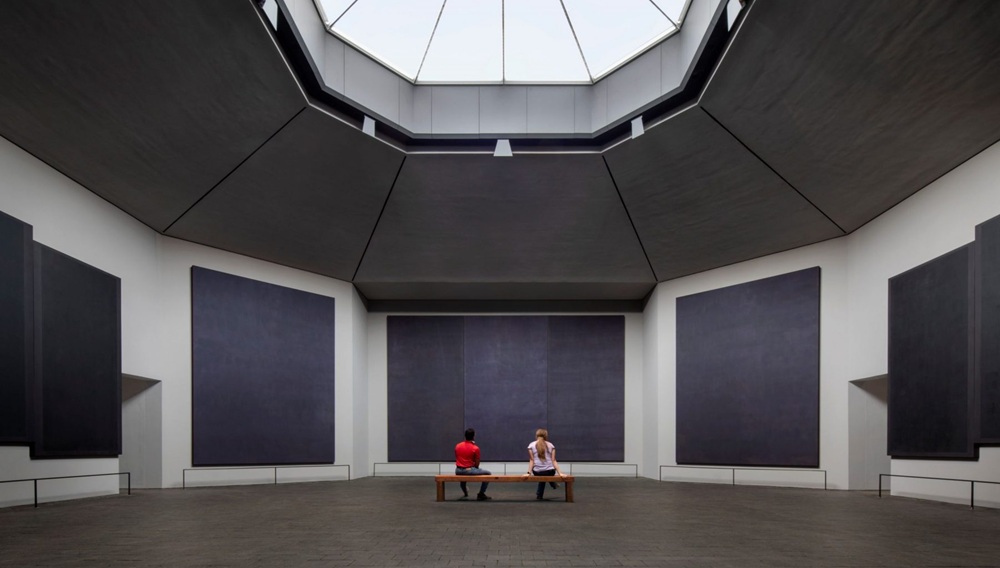
Rothko Chapel, Houston, Texas
En 1971, le couple de collectionneurs John et Dominique de Menil a ouvert au public à Houston, au Texas (en présence de représentants de diverses religions), la chapelle Rothko, peinte par Mark Rothko, l'un des plus célèbres représentants de l'expressionnisme abstrait : un véritable monument à l'œcuménisme. Ainsi, les origines de ceux que l'on pourrait appeler les artistes urbains inspirés par Dieu sont nobles.
In 1971, the married couple and collectors John and Dominique de Menil opened Rothko Chapel to the general public in Houston, Texas (in the presence of representatives of various religions), painted, as the name suggests, by Mark Rothko, one of the most renowned exponents of Abstract Expressionism: an authentic shrine to ecumenism.
Nel 1971, iconiugi e collezionisti John e Dominique de Menil aprirono al pubblico, a Houston in Texas (alla presenza di esponenti di diverse religioni), la Rothko Chapel dipinta, appunto, da Mark Rothko, uno fra i più noti esponenti dell’Espressionismo Astratto: un vero e proprio monumento all’ecumenismo. Sono dunque nobili le origini di coloro che possiamo chiamare gli artisti urbani di Dio.
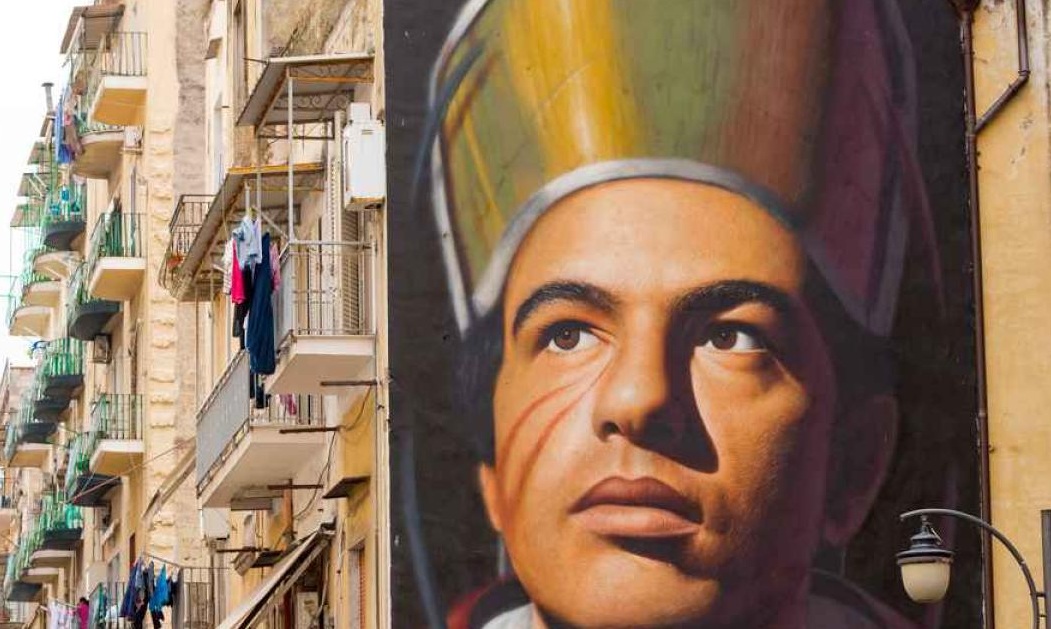
Jorit, San Gennaro, Napoli
Parmi eux, l’artiste Ex Voto qui documente le vandalisme de ses propres œuvres (les ex-voto, qu'il reproduit) et « enregistre » même les actes de vandalisme commis sur ses œuvres, les considérant comme faisant partie intégrante de celles-ci. Citons ensuite les muralistes, tels que Igor Scalisi Palminteri, né à Palerme (ancien prêtre), ou le Napolitain Jorit, chez qui prédomine la représentation réaliste du visage humain (son imposant San Gennaro a Forcella, à Naples). Il faut également mentionner Banksy, qui à Naples, Piazza Gerolomini, a peint une copie de la statue de Sainte Anne, que les Napolitains appellent la Madone (désormais protégée par une vitre). À Pise, Keith Haring a peint sur l'une des façades de l'église Sant'Antonio une œuvre fabuleuse intitulée Tuttomondo qui représente divers éléments, dont des cœurs, des serpents, des mains, des téléviseurs, des animaux, des croix et des symboles d'amour maternel.
So what we might describe as the urban artists of God have very noble origins. There are now literally hundreds and hundreds of examples of artists like this: such as Ex Voto, an artist (he claims to be an agit-prop) who actually records acts of vandalism on his own works (ex-votos, as he calls them); then there are muralists like Igor Scalisi Palminteri from Palermo (a former priest) and the Neapolitan artist Jorit, whose works focus on "the realistic depiction of the human face" (his San Gennaro in Forcella, Naples, is very striking). Not forgetting the media-savvy Banksy who painted a St. Anne in Piazza Gerolomini in Naples that replicates a statue in Rome, now referred to as the Madonna (protected behind glass) by the people of Naples.Keith Haring has created a fabulous work on the outside of the Church of Sant'Antonio in Pisa entitled Tuttomondo, commissioned by the friars, which various features like hearts, snakes, hands, televisions, animals, crosses, and symbols of maternal love.
Da qui si dipanano centinaia e centinaia di esempi: da Ex Voto, artista (lui si definisce agit-prop) che registra anche i vandalismi alle proprie opere (gli ex voto, che riproduce, appunto) e ‘registra’ anche gli atti vandalici alle proprie opere ritenendoli parte di esse. Poi ci sono i muralisti, fra i quali il palermitano Igor Scalisi Palminteri (ex prete) o il napoletano Jorit, laddove predomina «la raffigurazione realistica del volto umano» (imponente il suo San Gennaro a Forcella, Napoli). Non si può non citare anche il mediatico Banksy che, in Piazza Gerolomini a Napoli, ha dipinto una Sant’Anna copia di una statua che sta a Roma, ma che i napoletani chiamano Madonna (ora protetta di un vetro). A Pisa, invece, Keith Haring è autore di un favoloso lavoro intitolato Tuttomondo, all’esterno della Chiesa di Sant’Antonio, commissionato dai frati, che presenta elementi vari fra cui cuori, serpenti, mani, televisori, animali, croci e simboli di amore materno.
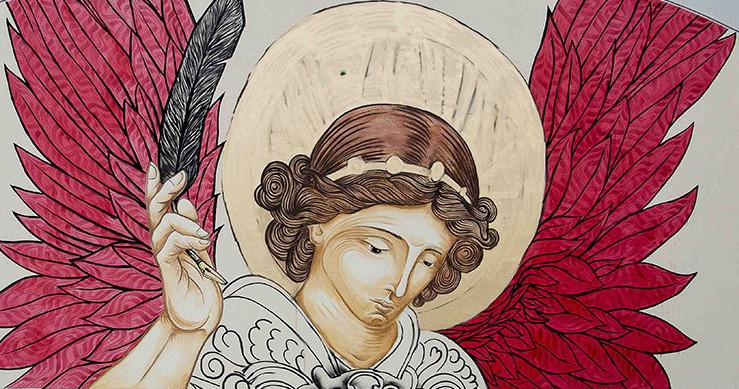
Mr. Klevra
L'ange de style médiéval de l'artiste romain Mr. Klevra, à Ostiense (Rome), est également remarquable. Ce ne sont là que quelques exemples parmi tant d'autres. Comment ne pas mentionner, par ailleurs, les nombreux « madonnari » qui dessinent à la craie des Vierges inspirées de Raphaël ou d'autres artistes célèbres sur les trottoirs des grandes villes ? Une sorte de « mandala » à l'occidentale.
The angel designed by the Roman artist Mr. Klevra in Ostiense, Rome, is another extremely interesting work with a distinctly Medieval feel. These are just a few examples among many. At this point, why not also mention the numerous so-called 'madonnari', who draw chalk replicas of the Madonnas by Raphael or other great artist on the pavements and sidewalks of major cities? Sort of Western-style "mandalas".
Molto interessante, medievaleggiante, l’angelo del romano Mr. Klevra a Ostiense, Roma. Si tratta solo di alcuni esempi fra i tantissimi. A questo punto, perché non citare anche i tanti ‘madonnari’ che disegnano le Marie di Raffaello o di altri big con i gessetti, sui marciapiedi delle grandi città? Una sorta di "mandala" all'occidentale.