BIENNALE ARTE VENEZIA 2026
KINGDOM OF MOROCCO PAVILION
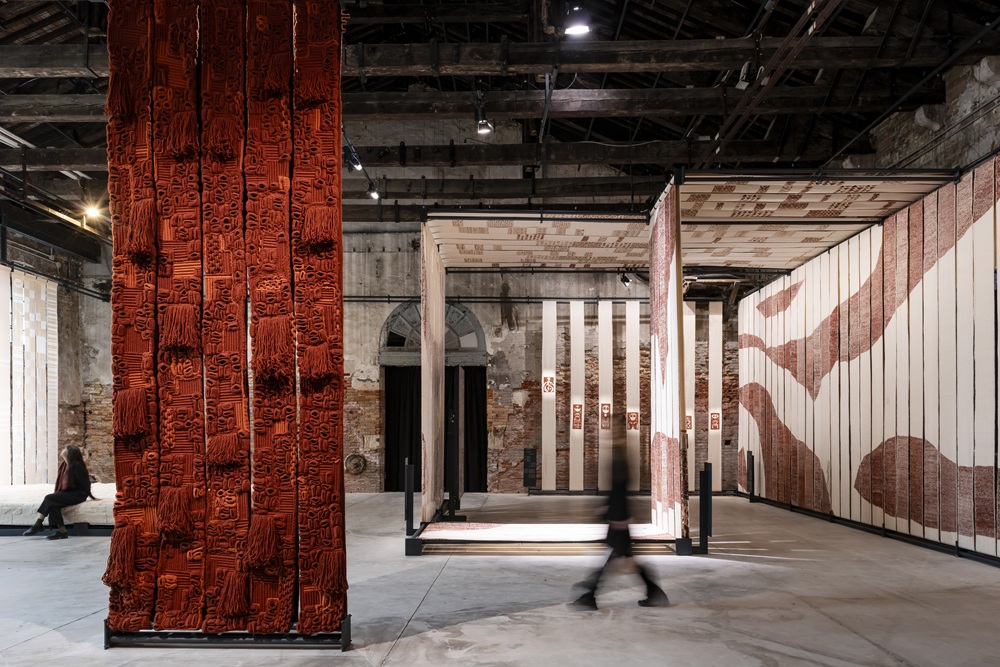
Courtesy of the Ministry of Youth,
Culture and Communication of the Kingdom of Morocco © Matteo Losurdo
Asǝṭṭa – terme Amazigh désignant un tissage rituel – est l’installation fascinante présentée dans le pavillon du Royaume du Maroc à la Biennale d’art de Venise, en cours jusqu’au 22 novembre 2026. Spécialement pensée par l’artiste Amina Agueznay et la curatrice Meriem Berrada pour la Salle des Artiglierie à l’Arsenal, Asǝṭṭa transforme le pavillon en une succession d'espaces intermédiaires dans lesquels l'intrigue, la structure et l'architecture existante entrent en dialogue.
Asǝṭṭa – an Amazigh word that means ritual weaving – is a fascinating installation on display in the Kingdom of Morocco pavilion at the Venice Biennale, running until 22nd November, 2026. Created specifically by the artist Amina Agueznay and curator Meriem Berrada for the Sala delle Artiglierie at the Arsenale, Asǝṭṭa transforms the pavilion into a sequence of interstitial spaces where the existing weave, structure and architecture dialogue with each other.
Asǝṭṭa – termine amazigh che significa tessitura rituale – è l'affascinante installazione presentata nel padiglione del Regno del Marocco alla Biennale di Venezia, visitabile fino al 22 novembre 2026. Ideata specificamente dall'artista Amina Agueznay e dalla curatrice Meriem Berrada per la Sala delle Artiglierie dell'Arsenale, Asǝṭṭa trasforma il padiglione in una serie di spazi interstiziali dove la trama, la struttura e l'architettura preesistenti entrano in dialogo.
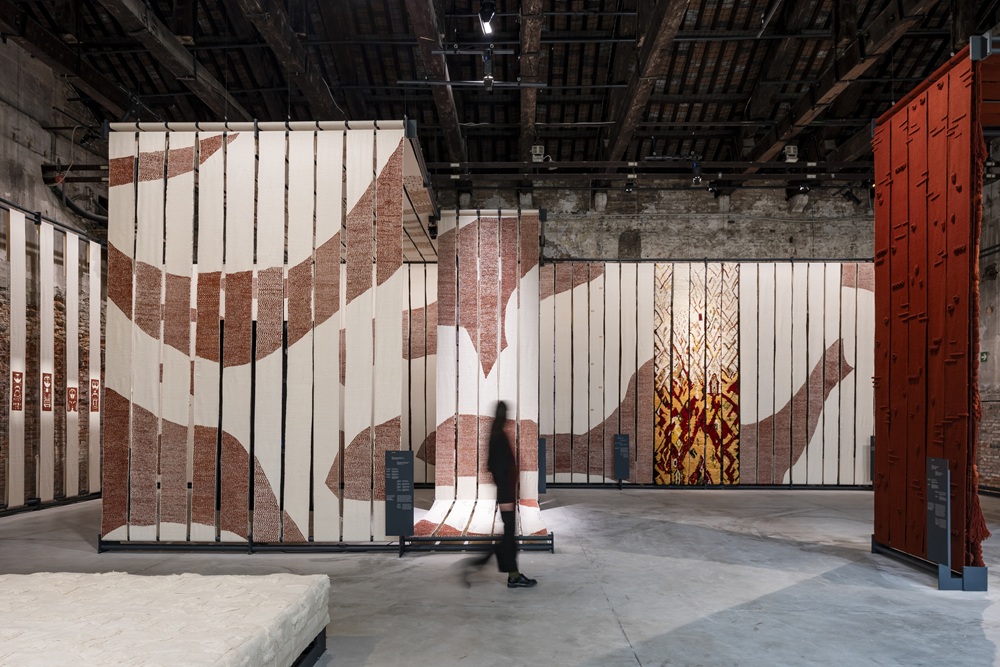
Courtesy of the Ministry of Youth,
Culture and Communication of the Kingdom of Morocco © Matteo Losurdo
S’articulant, en résonance avec le thème de cette édition, In Minor Keys, Asǝṭṭa s’articule autour de la symbolique du seuil, proposant une réflexion sur la transmission des savoir-faire traditionnels et la mémoire partagée. Le seuil, la âatba – ce passage entre intérieur et extérieur, privé et public, sacré et profane, au cœur des architectures traditionnelles marocaines devient un espace habité, un lieu de transition actif. L’installation est un hommage à ces talents souvent invisibles, ces voix mineures qui passent souvent inaperçues : les détenteurs et détentrices de savoir-faire séculaires, qui contribuent à la beauté du monde.
In tune with this year's theme, 'In Minor Keys,' Asǝṭṭa revolves around the symbolism of a threshold, examining how traditional know-how and shared memory are passed on and handed down. The threshold, the âatba – a passage way between the inside and outside, private and public realms, the sacred and profane, all key features of traditional Moroccan architecture – turns into a lived space, an active place of transition. The installation is a tribute to all those mainly invisible talents, minor voices that often go unnoticed: the guardians of ancient knowledge, who contribute to the beauty of the world.
In sintonia con il tema di quest'anno, " In Minor Keys ", Asǝṭṭa ruota attorno al simbolismo della soglia, offrendo una riflessione sulla trasmissione dei savoir-faire tradizionali e della memoria condivisa. La soglia, l'âatba – questo passaggio tra interno ed esterno, privato e pubblico, sacro e profano, centrale nell'architettura tradizionale marocchina – diventa uno spazio abitato, un luogo attivo di transizione. L'installazione è un omaggio a questi talenti spesso invisibili, a queste voci minori che spesso passano in osservate: i custodi di un sapere secolare, che contribuiscono alla bellezza del mondo.
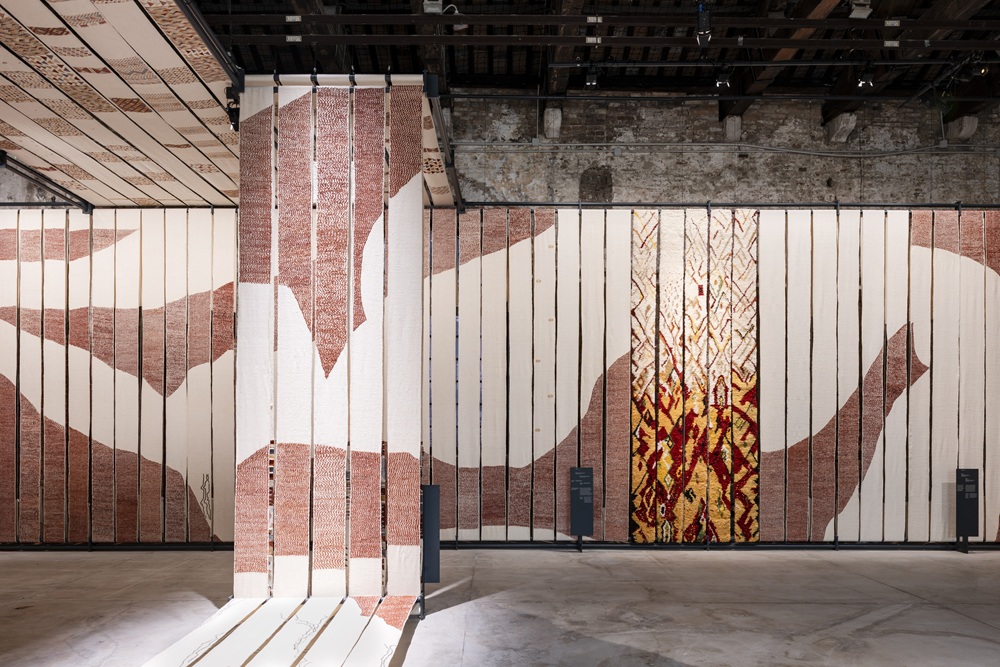
Courtesy of the Ministry of Youth,
Culture and Communication of the Kingdom of Morocco © Matteo Losurdo