
04 - MONITOR BY MICHELE BAZAN GIORDANO
FANTASTIC GOOGIE
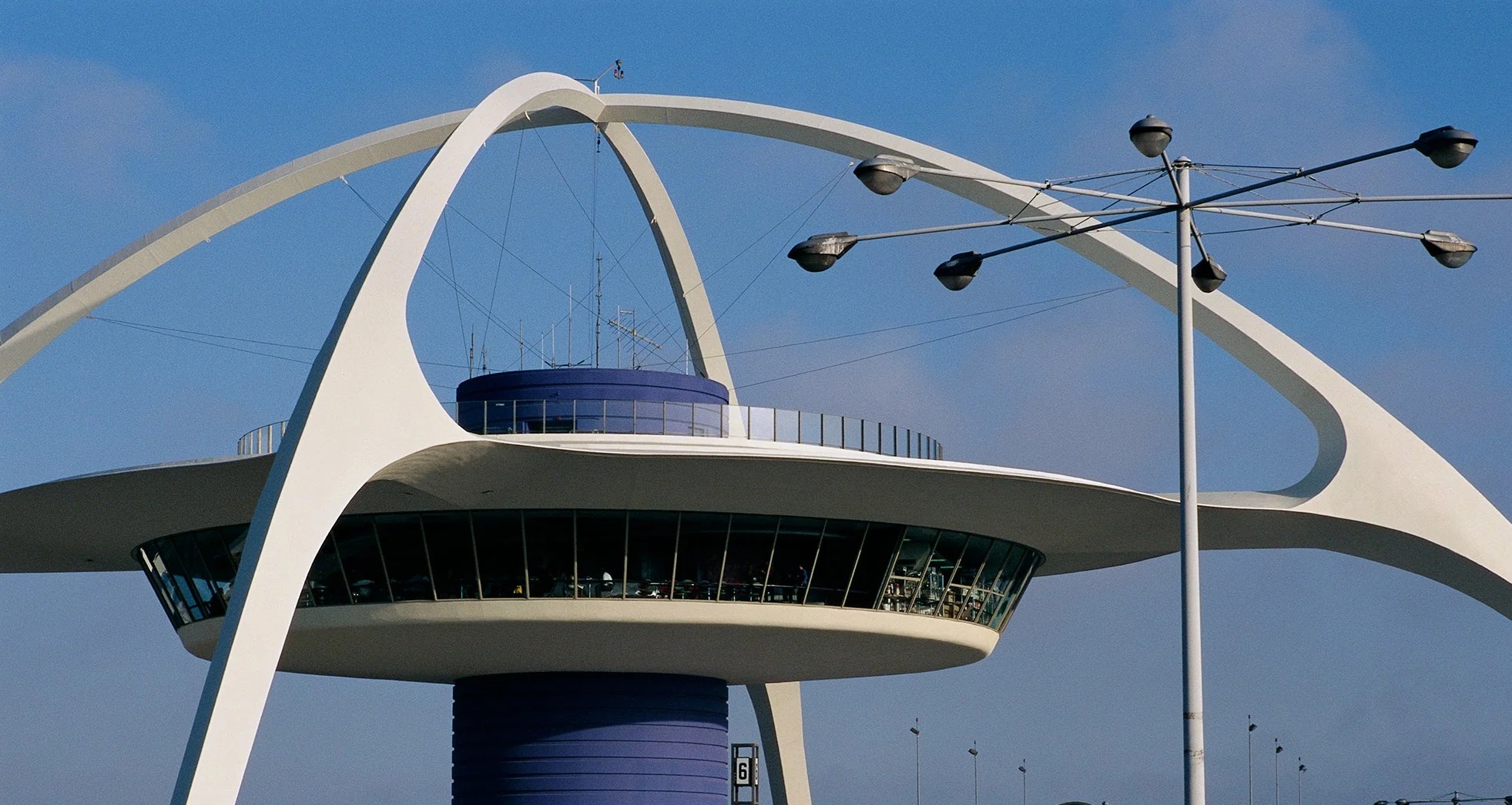
Les aventures galactiques des protagonistes de The Fantastic Four : First Steps (2025), une nouvelle production Marvel à 8,5 millions d'euros, ont fait réapparaître le Googie, un véritable style né dans les années 1940 et 1960 (certains l'ont qualifié, un peu injustement, de kitsch), typique de la côte ouest américaine et suffisamment futuriste et avant-gardiste pour être comparé au mouvement italien de Filippo Tommaso Marinetti.
The galactic adventures of the main characters in The Fantastic Four: First Steps (2025), yet another Marvel franchise film with a budget of eight and a half million euros, have brought the Googie style back into the spotlight, a 'style' of its own from the 1940s to the1960s (some have unfairly called it kitsch), typical of the West Coast, that is futuristic-avant-garde enough to link it to the Italian movement founded by Filippo Tommaso Marinetti.
Le galattiche avventure dei protagonisti de The Fantastic Four : First Steps (2025), ennesimo prodotto Marvel da 8 milioni e mezzo di euro, hanno riportato alla luce il Googie,vero e proprio ‘stile’ partorito negli anni 40 e 60 del secolo scorso (qualcuno l’ha ingenerosamente definito kitsch), tipico della West Coast, nonché futuristico-avanguardista quanto basta per accostarlo al movimento italiano di Filippo Tommaso Marinetti.
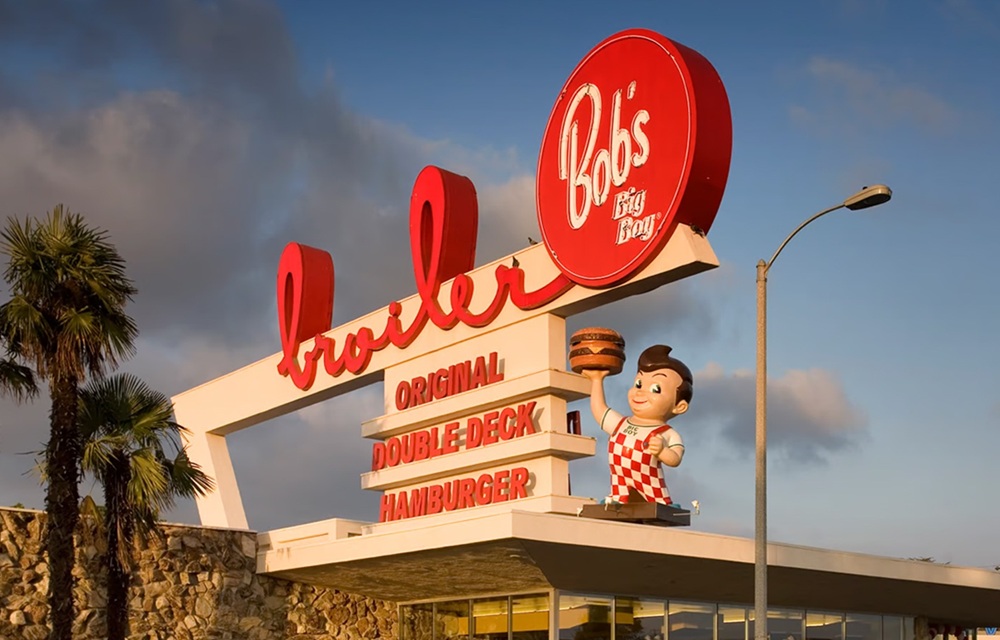
Le Googie n'est pas tant né d'un consensus culturel que d'une volonté de répondre aux besoins de l'Américain moyen. Los Angeles (déjà comparée à Donaldville) en est la capitale à tous égards ; la ville est déjà Googie en soi, avec ses immenses avenues bordées de files interminables de voitures, ses néons dominants bars et stations-service, ses bowlings et ses motels, où l'urbanisme, tel que nous le concevrions aujourd'hui, fait cruellement défaut. C'est, en somme, le triomphe de la diversité des éléments qui composent la ville, à une exception près : l'excentricité. De plus, le style Googie repose sur un mélange d'arts appliqués, chacun étant indépendant.
Googie did not emerge from some sort of cultural movement, it simply aligned with the needs of the average American. Los Angeles (already compared to Duckburg) is its capital in every sense of the word, being Googie in itself, with huge avenues lined with endless rows of cars; neon signs towering over bars and service stations, bowling alleys and motels, where there is a lack of what we would today call comprehensive urban planning. It is, in short, the triumph of the diversity of the various parts that make up a city, with the exception of one single unifying factor: eccentricity. Moreover, Googie is based on a mix of applied arts, each of which stands alone.
Il Googie non nasce tanto da un consesso culturale, quanto per allinearsi con le esigenze dell’americano medio. Los Angeles (già paragonata a Paperopoli) è la sua capitale a tutti gli effetti, è già googie di per sé, con immensi viali percorsi da interminabili file di auto; neon che svettano sui bar e sulle stazioni di servizio, bowling e motel, laddove manca quella che oggi definiremmo una programmazione urbanistica complessiva. È, insomma, il trionfo della diversità dei vari elementi che costituiscono la città, fatta eccezione per un unico fattore accomunante: l’eccentricità. Per di più il googie si fonda su un mix di arti applicate ognuna delle quali fa per sé.
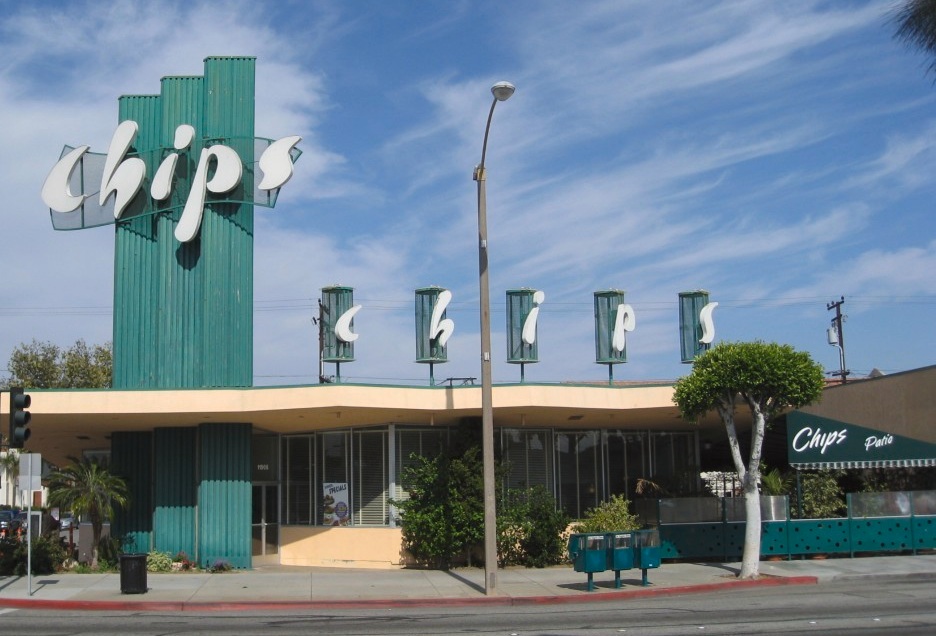
Malgré cela, il faut reconnaître son influence durable, jusqu'à se faire sentir dans l'architecture internationale contemporaine : prenons par exemple le gratte-ciel Pirelli de Gio Ponti à Milan, datant de 1950, dont l'allure vaguement futuriste rappelle, sinon tous, du moins certains éléments Googie. Aux États-Unis, on retrouve ce style dans des lieux publics, comme le Baldwin Theatre à Los Angeles conçu par Lewis Eugene Wilson en 1949, mais aussi dans des carrosseries automobiles telles que la Buick Le Sabre, dessinée en 1950 par Harley Earl (1893-1969), que l'on imagine plus taillée pour la conquête spatiale que pour la course automobile, avec ses feux arrière intégrés à des ailerons aérodynamiques. Frank Lloyd Wright lui-même doit quelque chose au style Googie : après tout, l'architecte de Fallingwater a été formé à l'école de John Lautner, l'un des protagonistes du style californien. Michele Bazan Giordano
Nevertheless, credit must be given for leaving a lasting imprint and influencing contemporary international architecture: for instance, consider the Pirelli Tower by Gio Ponti in Milan, built in the 1950s, whose vaguely 'futuristic' appearance echoes some (if not all) aspects of Googie. In the USA, there are public venues such as Baldwin Theatre in L.A. designed by Lewis Eugene Wilson in 1949, but also cars like the Buick Le Sabre designed in 1950 by Harley Earl (1893-1969), which seems more ready to launch into space than drive down the highway, with its rear lights set in aerodynamic fins. Even Frank Lloyd Wright owes something to Googie: after all, the architect who designed Fallingwater went to John Lautner's school, one of the leading exponents of the Californian style. Michele Bazan Giordano
Nonostante
ciò, gli va dato atto di aver lasciato un’impronta duratura, influenzando anche
l’architettura contemporanea internazionale: pensiamo, per fare un esempio
europeo, al grattacielo Pirelli di Gio Ponti a Milano, del 1950, che, per il
suo aspetto vagamente ‘futuristico’
richiama, se non tutti, certo alcuni elementi Googie. Negli Usa
ci sono i locali pubblici, il Baldwin Theatre di L.A. progettato da Lewis
Eugene Wilson nel 1949, maanche le carrozzerie delle
automobili come la Buick Le Sabre, disegnata nel 1950 da Harley Earl
(1893-1969) che immaginiamo essere pronta più a un lancio nello spazio che a
una corsa in autostrada, con i suoi fari posteriori incastonati in alette
aerodinamiche. Persino Frank Lloyd Wright deve qualcosa al Googie: in
fondo, l’architetto della Casa sulla Cascata si formò alla scuola di John
Lautner, uno dei protagonisti dello stile californiano.
Michele
Bazan Giordano 