FROM PARIS BY ALBA BASILE
UNEXPECTED REFLECTIONS - LA TOUR
TRIANGLE
© Herzog & de Meuron
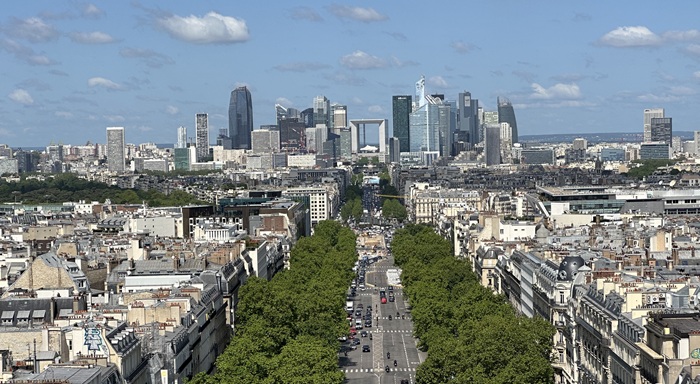
Comparisons with the past are unavoidable. Architectural design in a metropolis like Paris means stepping into the imagination of millions of people while also having a vision of how reality and very different types of people can coexist, respecting History even when the projects in question are bold, imposing statements. The Grande Arche in La Défense is an example of this. In 1983, an international competition awarded the commission to Johan Otto von Spreckelsen, a Danish architect working without the support of a major professional firm who had the powerful idea of not building a solid structure but just the outline of a cube to define a huge empty space, slightly offset by about 6.30° from the Arc de Triomphe. What won the competition was this symbolic relationship with one of the city’s greatest landmarks.
La Grande Arche Paris
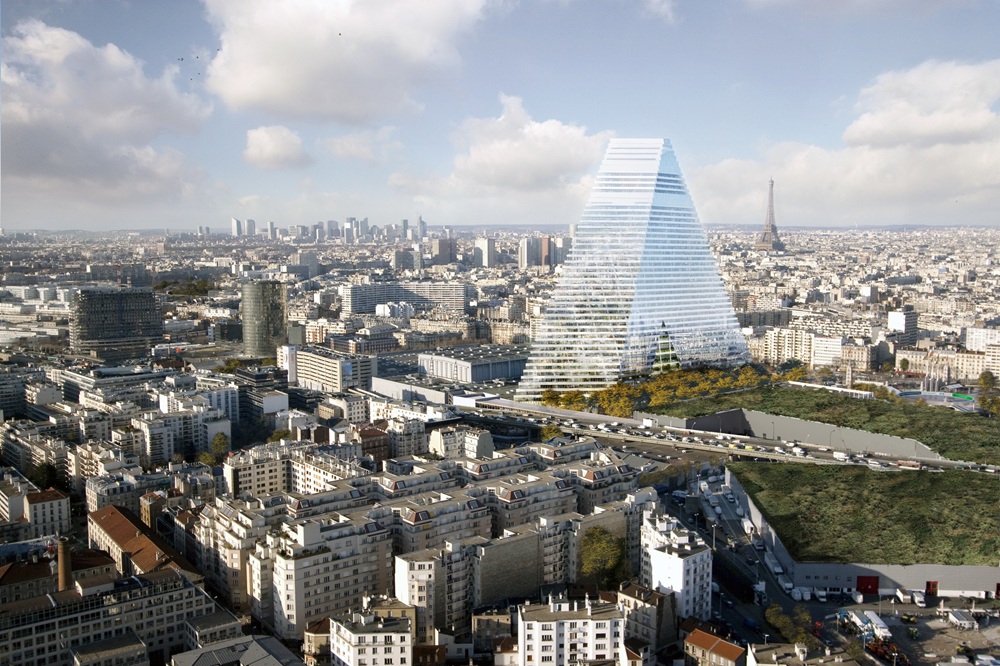
The Tour Triangle designed by the architects Herzog & de Meuron follows the same conceptual path. At Porte de Versailles, where it is under construction, it can easily be seen how the composition of buildings on each block changes in style from different eras, often clashing, with no attempt at continuity and for no good reason other than the idea of architecture transforming over time. The new tower, on the other hand, has its own underlying logic and its dialogue with the Eiffel Tower is not just visible in aerial photos. So out of scale and out of synch, both these buildings break up the urban landscape, vertical landmarks made possible by technology. That is what architects have always been after, drawing our eyes and minds upwards with the flying buttresses of the Gothic style or the incredible engineering properties of structural glass.
© Alba Basile
The opting for a geometric form seems like a statement of intent: to dematerialize a structure that’s already impactful and create a reflection of the iron tower that’s even more evocative of the French capital. Achieving this was not easy at all, because it involved innovative studies to get the glass to reflect just the right amount, block out a high percentage of solar heat, and still achieve energy savings by integrating cutting-edge solar panels into the glass modules on the south facade. All of this while still allowing as much natural light in as possible, the kind that Dominique Perrault also chose to draw in from above at Villejuif-Gustave Roussy Metro Station on the Grand Paris Express. More reflections of the past: sunlight filters up to 50 meters below ground through an oculus, an erudite reference to the Pantheon in Rome, designed to make a transit space in an oncology hospital less “anxiety-inducing,” as the designer explained at the recent “Architectures of Scale” conference in Turin.
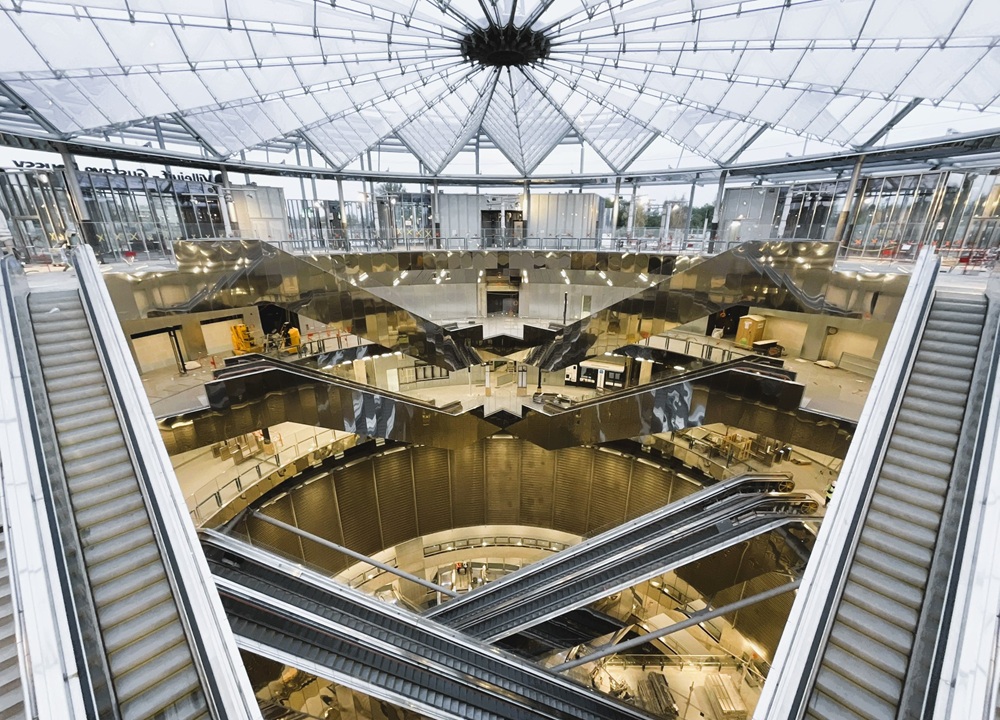
Villejuif-Gustave-Roussy,
©Arthur Jan Dominique Perrault
Architecte ADAGP
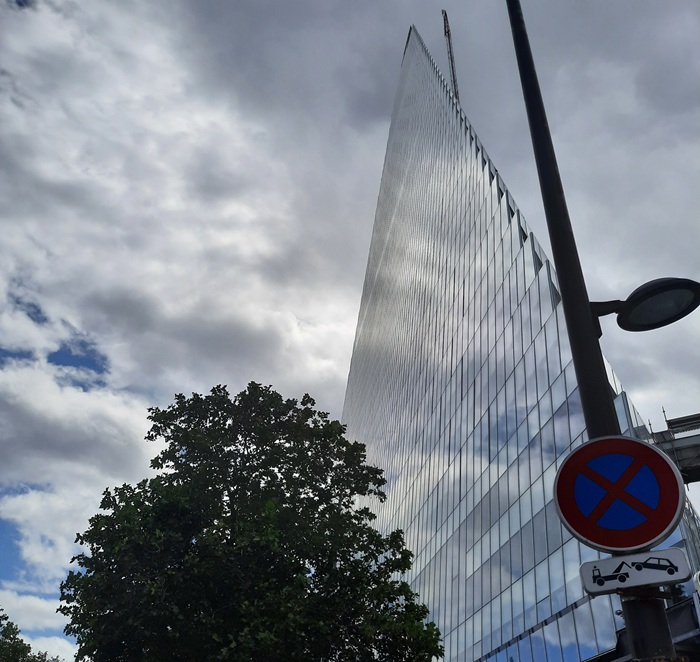
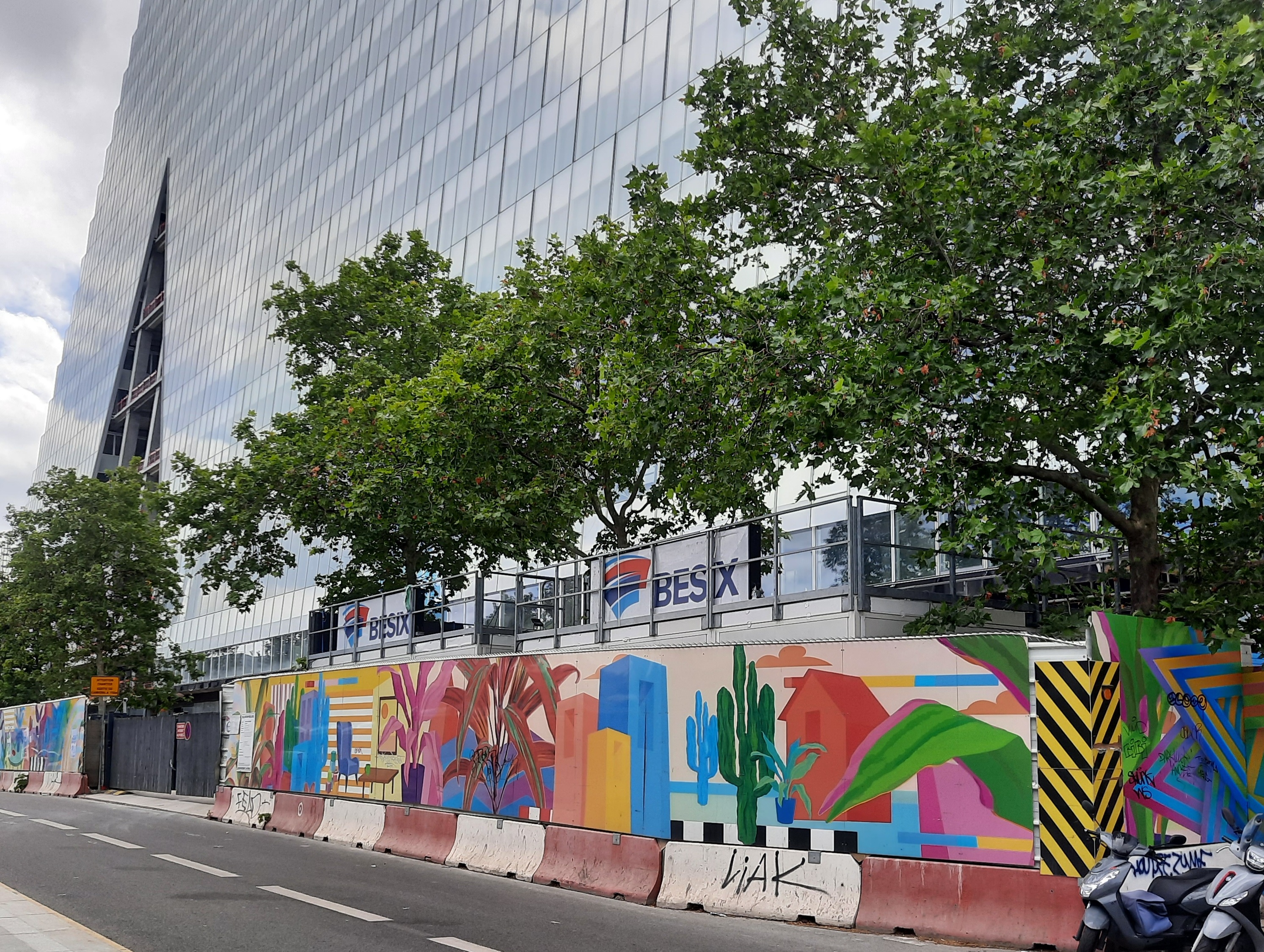
It’s important to respect the emotional perception of the built environment, making it as unobtrusive as possible: the Tour Triangle does look like a structure to anybody exiting the metro near Parc des Expositions. The building seems almost non-existent, just a thin 180-meter glass blade with a jagged profile lost in the sky. This was a deliberate decision to avoid casting oppressive shadows over the buildings in the densely populated 15th arrondissement.That the whole project stems from reflections extending beyond just architecture is paradoxically shown even by the tower’s construction fence, an element that is usually temporary. Tim Zdey (Hong Kong 1989), known for his graffiti and humanitarian initiatives, painted the fence on Avenue Ernest Renan, expressly dedicating the work to an architectural project that combines innovation with a lasting social ideal
© Alba Basile
The design is conceived dynamically to be viewed both while walking around the construction site and from a distance. The artist encourages playing with different perspectives, striking colours and contrasts with organic elements to anticipate the effect of this new way of experiencing an urban space with deep historical roots. Because "We become prisoners of the past through loss, not through the cult of memory" (Paolo Portoghesi). Alba Basile