
CRACKS 01 BY MATTEO BERGAMINI
ESTUDIO TUPI, SÃO
PAULO, BRAZIL
© Leonardo Finotti
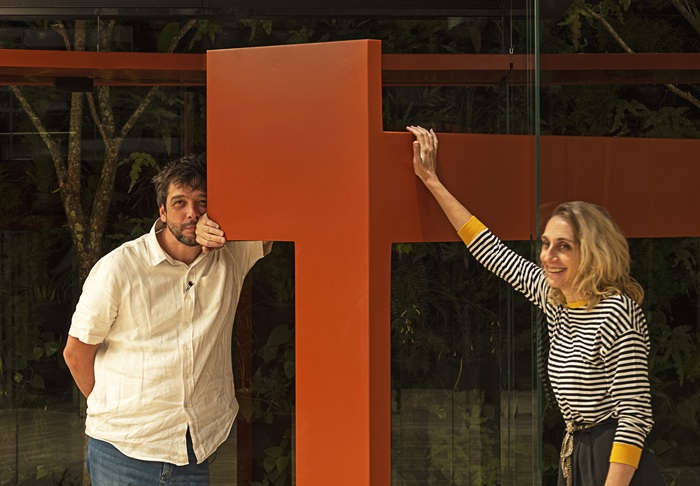
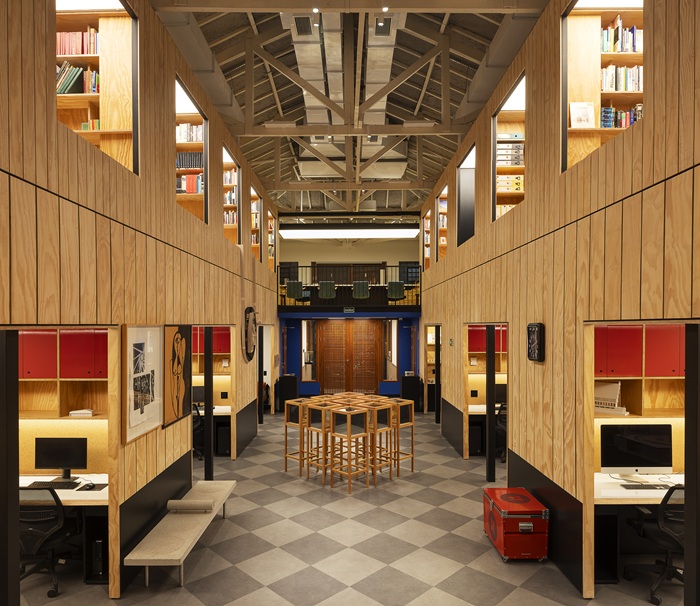
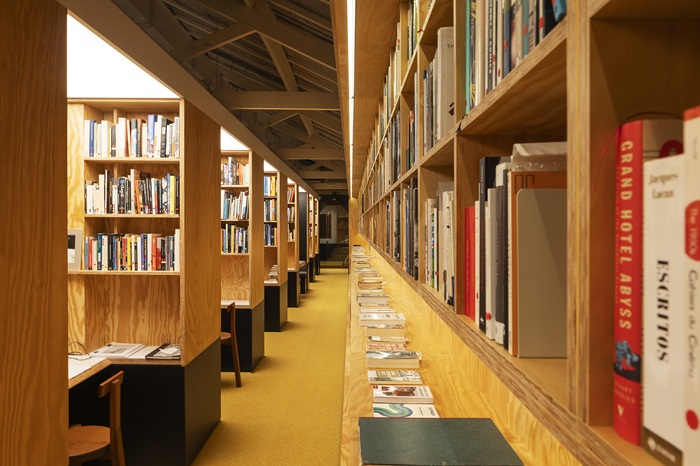
Grandson of the first Italian consul to settle in Belém in the state of Pará in the early 1930s, Aldo Urbinati – who runs Estudio Tupi in São Paulo with his partner Andrea Vosgueritchian – is obsessed with the Theory of Architecture and, more specifically, with Manfredo Tafuri (1935-1994), one of the most important Italian thinkers in this field. Housed in a building in the Pinheiros area, a hybrid neighbourhood constantly on the verge of gentrification but which, despite everything, still retains its bohemian vibe in certain spots, Estudio Tupi has turned into a unique space combining project areas with a library-archive that's constantly under construction and rearrangement.
©Leonardo
Finotti
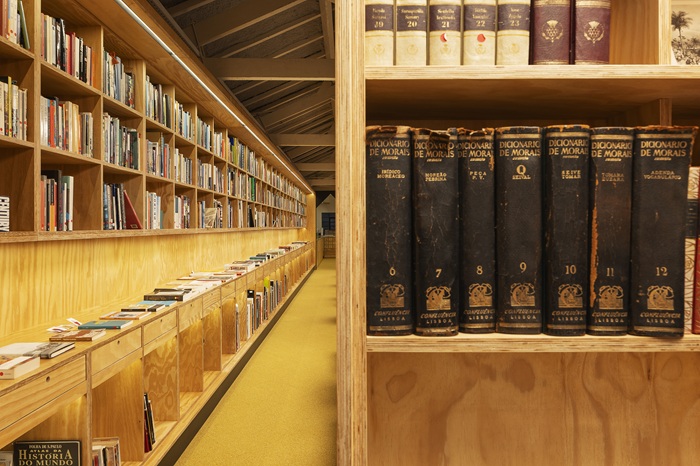
His collection boasts of over 20,000 books
including some rare editions: a legendary catalogue by Sol Lewitt published by
the John Weber Gallery in New York in 1974, entitled “Incomplete Open Cubes”,
which came from Bonhams’ auction of the actress Diane Keaton's collection (June
2026) and also highly prized editions by Franco Cosimo Panini detailing selected
Italian landmark buildings (such as the Baptistery in Florence and Palazzo Te
in Mantua), just to name a couple. There is a real gem right at the entrance: a
handwritten letter by Le Corbusier featuring drafts of projects for São Paulo,
Rio de Janeiro, Montevideo and Buenos Aires, the capitals that the architect flew
over and visited in 1929.
© Leonardo
Finotti
For Aldo Urbinati designing is a
mental state, a means of perceiving time and directing thought. It's no
coincidence, in fact, that the two architectural designers have set up 14
workstations on the upper floor of Estudio Tupi: it takes the English concept
of a fortnight to occupy one station a day. This is an empirical and very effective
way of measuring and tracking time inspired by one of the places that most
shaped Urbinati's vision of design, London, where the firm – founded in 2004 –
operated from 2007-2016.
© Leonardo Finotti
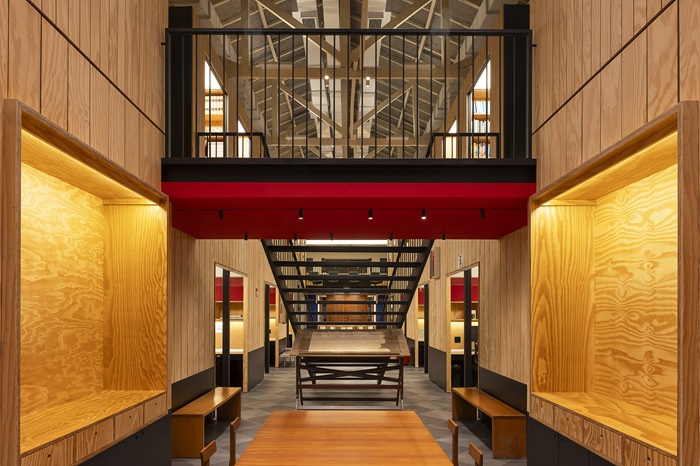
The atelier's own statement reads as follows: 'We work in the fastest way possible: that is, doing one thing at a time, at the pace required. We work with wild love and raw knowledge. We do everything by hand (as well as on the computer).' In actual fact, Aldo abandoned the computer keyboard a few years ago now to go back to using a typewriter. And in the explosive story he has written, sitting at one of the workstations, this particular return to the past doesn't appear to be some kind of whim, it indicates the direction in which Tupi's design is heading: towards theory and encounter. Fearlessly inspired by Masters like, for example, Leon Battista Alberti and Paulo Mendes da Rocha; Oscar Niemeyer and his iconic helical staircase in Itamaraty Palace in Brasilia in the showroom of the fashion brand NK. May be Estudio Tupi has found the architectural equivalent to a lexicon: ser and estar, meaning to be and to stay in Portuguese. The force of theory and the mobility it entails. Matteo Bergamini
© Leonardo Finotti