08 SPOTLIGHT BY JACQUELINE CERESOLI
MATTEO BERGAMAINI: A FOREIGNER CAN IDENTITY WITH ALL THE MULTIFORMAL LANGUAGES OF CONTEMPORARY ART IN BRAZIL
Matteo Bergamini (1984), a journalist specialising in contemporary art, the former editor-in-chief of exibart (2017-2022) who works with Italian and Brazilian publications, an art critic and independent curator, and the co-curator of the sixth Bienal do Sertão, Brazil, talks exclusively with l'Arcaweb about Rafael De Almeida solo exhibition in Brasilia, the so-called planned city and capital of a vast territory rich in social culture. Jacqueline Ceresoli
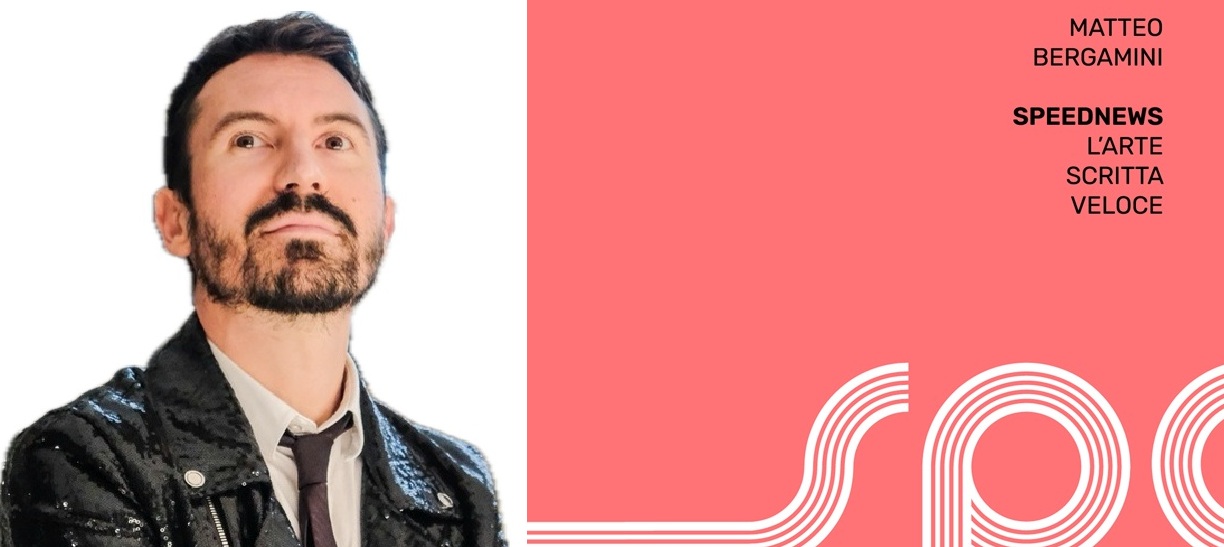 Matteo Bergamini ©
ph.Paolo Biava
Matteo Bergamini ©
ph.Paolo Biava
You used to live in Lisbon but then your fascination with the Portuguese language took you to Brazil: when did you decide to explore the languages of contemporary art in this amazing country, and why? I never really made that decision: I set off to somehow mark the end of a period of major changes and, at the same time, because the future wasn’t so clear. But deep down, it never really has been for me: every now and then I feel worried, but then I shift my perspective as the fabulous artist Dario Ghibaudo taught me, and I see things differently...
How much did the experience of traveling in search of new artistic languages, first in São Paulo and then in more remote parts of Brazil, influence your critical thinking and how has your view of Western contemporary art changed? I'll keep it simple and brief: I felt less guilty about losing interest in 'Conceptual' thinking [laughs]. By Conceptual, I don't mean so much a style or a philosophy of creative thinking, but rather the dynamics and superstructures that pervade contemporary art as it studies itself. Not just Brazil, but Latin America in general – which is undergoing a process of ‘colonising its gaze’, an authentic 'commercialisation' of diversity – has shown me a world that can function without the mad rush and hysteria usually associated with our professional lives. And I’m not talking about naïveté or superficiality, but awareness.
In your recent book Speed News. Fast-Written Art (art-frame books, 2026), what stance do you take regarding the dictatorship of social networks and SEO (Search Engine Optimization)? I distance myself from it to some extent: no need for demonisation, but we should not just give in to it. I think I presented a somewhat anarchic point of view, rather like the way I feel myself: 'the rule is to regulate yourself,' as Alighiero Boetti has stated, also suggesting we should not 'get carried away with ourselves.' Well, I think that is the kind of Conceptual stuff I still like [laughs].
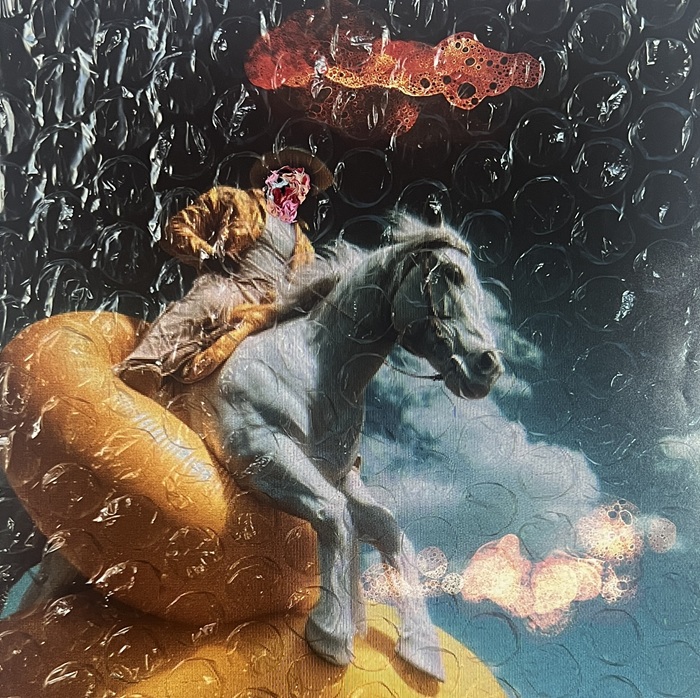
Rafael De Almeida, extrafragil nr. 03, 2026
What advice would you give to a young person who wants to write about contemporary art, what opportunities do they have in the age of AI-generated algorithmic writing? Algorithmic writing, which is a bit automatic – almost like an exquisite surrealist corpse, I would say – can, I believe, be used to “outline” the foundations of your own writing. I’ll make a culinary comparison, since I like cooking: Artificial Intelligence can help mix the ingredients, knead and blend, but you have to make the right doses, otherwise you will end up with a fast food restaurant where everything tastes the same.
In Brasilia, you are the curator of Rafael de Almeida’s (1987) solo exhibition, entitled 'Before the Leather Gives Way' [Antes do couro ceder, in Portuguese]: what innovations has the artist to offer as regards contemporary figurative painting in relation to A.I.? Rafael teaches film studies at UEG, but at the same time he has developed a kid of artistry focused around his home environment, the Cerrado, a vast biome in the middle of the country, now the scene of the worst kind of agriculture and intensive livestock farming and at risk of disappearance due to the fact it is constantly exploited by post-agrarian capitalism. Drawing on both historical photos and the creation of a new “archive” using an Artificial Intelligence trained to imagine what “could have been,” the artist gives visible shape and form to a past that is now often forgotten or deliberately erased. At the same time, these new images – all made in cyanotype, highlighting a sort of short circuit between the idea of an archive recreated through AI prompts and old-fashioned technology – take on a bittersweet feel, almost reminiscent of saudade.
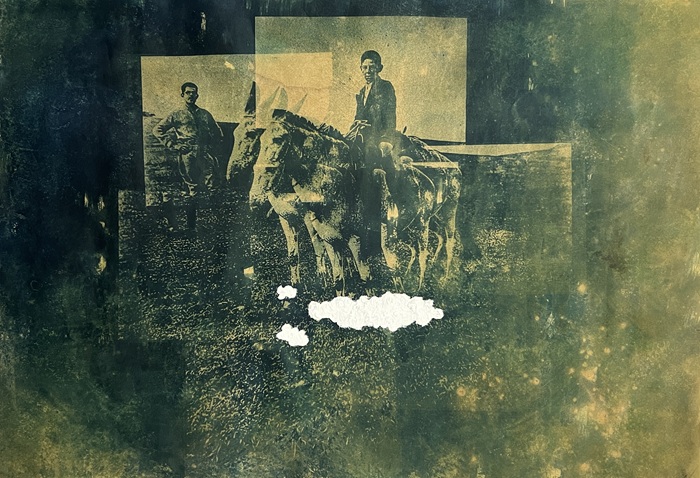
Rafael De Almeida, Aula de montaria, 2026
What is the main theme of Rafael de Almeida's prompt-graphic and poetic experimentation? In this case, it's about the relationship, both physical and metaphorical, between humans and animals, ranging from the feelings of friendship that young children have with four-legged animals to the violence that often develops toward them once they enter the realm of 'products' and profit: the pain of loss, even of innocence; issues of male fragility in a frequently hostile environment - these are just some of the themes addressed. The new collection we’ll be presenting in Brasília have not been shown before and were all created since January.
Why does figurative painting and sculpture with organic-surrealist or totemic-primitivist echoes prevail in contemporary Brazilian art? I like to think it’s due to a closer connection to life and the mysteries of nature, and, I would dare say, even the Divine. Energy, even in heavily anthropized areas, isn’t just intellectual chit-chat.
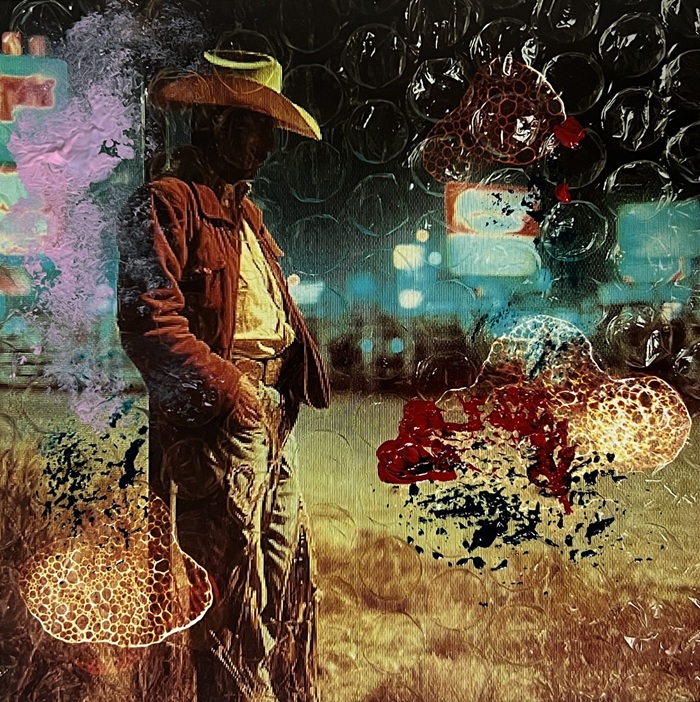 Rafael De Almeia, Onde a festa nunca acaba, 2026. Courtesy l'artista
What does Brasilia mean to you, somebody who writes about art and Western culture, who once lived in Milan and is now a globetrotter, and what is your experience of this new city that is just over sixty years old? I can't answer that: another thing Brazil has taught me is to feel perpetually like a “gringo,” a foreigner, in a territory that nonetheless reminds me of the pleasure of feeling at home, wherever I am. So I’ll let Clarice Lispector speak for me: “Brasília is the sound of ice in a glass of whisky at six in the afternoon, no man’s time.” For me, that is the Brasilia of Lúcio Costa and Oscar Niemeyer’s Plano Piloto: the embrace of a stranger, both comforting and unsettling.
Do you think Western art has lost its cultural centrality in the age of capitalist liberalism and the crisis in ideas and storytelling? I don't think so. I think Neoliberalism has simply decided to shift the spotlight – as regards politics and economics – to other topics and other geographical locations, squeezing them dry before moving on to other “novelties”, which will once again overwhelm us, saturate us and then be abandoned. Maybe everything really is cyclical?